Find all editions of Cough Science News below and get access to the latest cough science developments, publications, and interviews with cough experts.
7 July 2026
Hello,
July was very eventful for cough science, and that fact alone makes me very optimistic, as a scientist and a chronic cougher myself. I'm going to dedicate this edition of Cough Science News to the London Cough Conference as THE event for cough this year and cover my view of various conversations that took place.
(PS: We’ll also be at the ERS Congress and present 2 posters. Please reply to this email if you’d like to meet)
A question often asked at prior meetings was whether cough could be counted continuously and reliably outside a clinic. This year that was replaced with a harder and more interesting question: what makes a cough measurement trustworthy enough?
These are the questions I find important to answer, and the programme touched on most of them over three days.
I gave one of the talks and organised it around these questions. The data I drew on comes from a body of work that has grown quickly, over 60 research projects, nine FDA-enabling studies, 186 human years of monitoring and 17 million coughs detected… and volume and quality of data matters here because none of these questions can be answered without it.
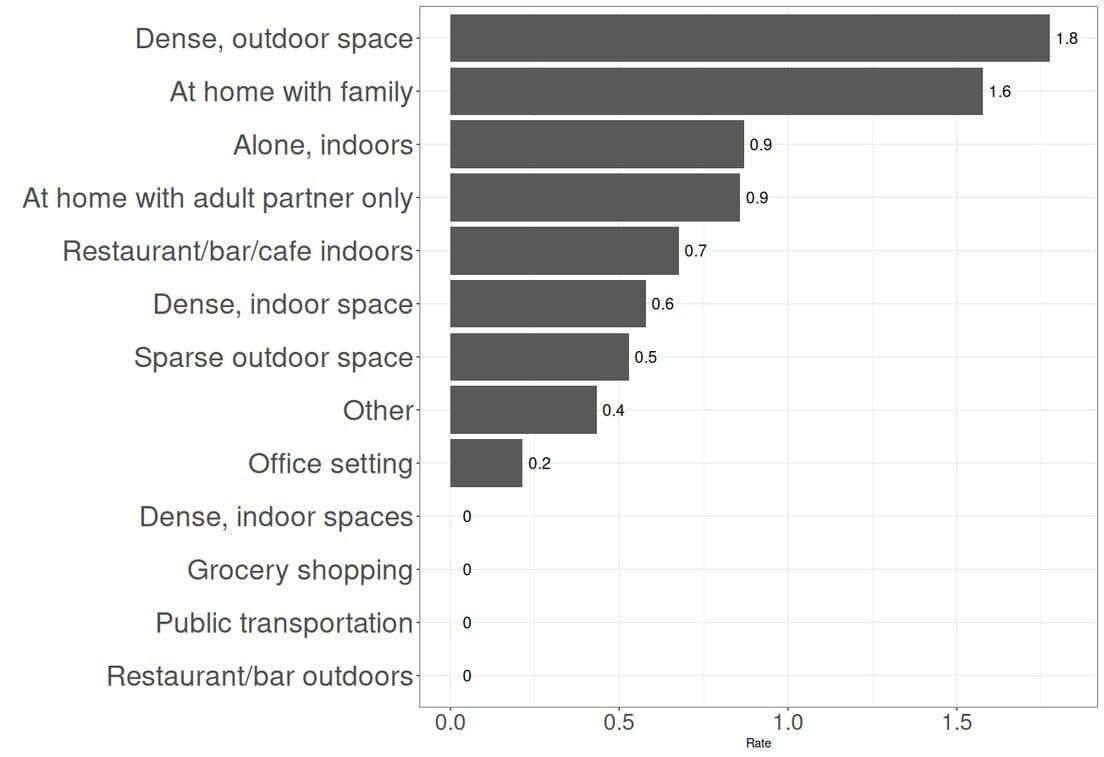
Whether a wrist-worn monitor picks up other people's coughing came up at the meeting, and it is a question Japan's PMDA had already raised with us. We answered it twice. First in everyday use, monitoring ten non-coughing volunteers across 854 person-hours while tracking their environments, which produced zero to two detections an hour and fewer than five a day. The PMDA then requested a harder test before it would accept continuous monitoring as a primary endpoint in a Phase 3 trial: discordant cohabiting couples, a non-coughing wearer living with a coughing partner. Across 316 person-hours and 4,490 partner coughs, 8.7% of the partner's coughs registered on the wearer's device, at 1.24 an hour, and 83.5% of monitored hours contained none at all. The regulator concluded this would not materially impact studies.
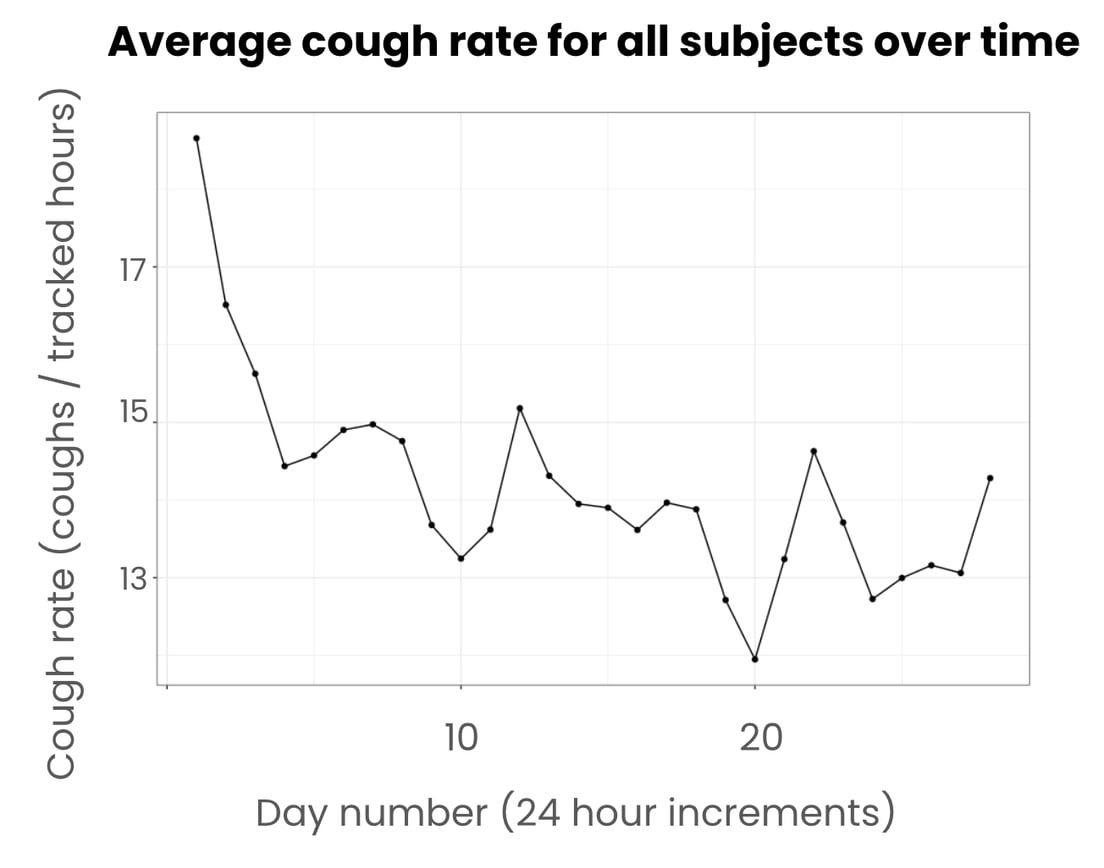
In 31 patients monitored beyond 28 days, cough rate ran 27% above the day four to 28 average on day one and 22% above on day two. The 6% elevation on day three was not statistically significant. We are exploring discarding three days and reading the seven that follow. That early inflation may also have something to do with the large placebo effects seen in so many Phase 3 trials, though I would put it no more strongly than that.
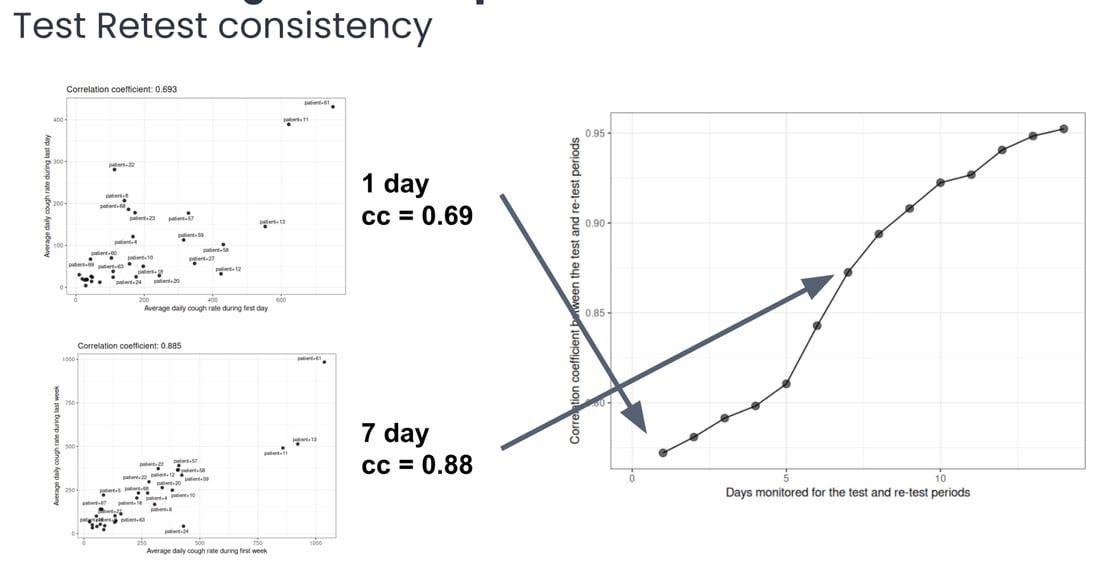
I do not think the field has a definitive answer yet, and I would rather say so than pretend otherwise. What we can say is that a single day is a poor estimate. Our test-retest consistency is 0.69 over one day and 0.88 over seven, which is the basis for proposing seven. Single-day counting found few defenders in London, though the 24-hour standard was still defended from the floor on the grounds that it has worked - though the last day’s bombshell has some experts disputing that claim. Views on optimal duration ran from five to seven days, with some arguing for ten.
The consensus was that patient-reported outcomes and objective counts are orthogonal measures. One asks how the condition is affecting your life, the other how much the drug changed your cough. Both belong in a trial, and the correlation between them stays marginal as one would expect. Continuous data also shows bouts, the long runs of coughing where patients get short of breath, have incontinence, or break a rib. Whether bouts track how bad patients feel better than raw counts is testable and worth doing. Loudness came up and was controversial, but nothing I heard convinced me. How loud a cough is does not reflect how much it bothers you. The last cough in a bout of seven is the softest one, and it is often the most disturbing.
Another major message of the conference was that refractory chronic cough is not the only cough with an unmet need. IPF, bronchiectasis and COPD were featured for the first time, which I found quite interesting, because it means this meeting is going beyond chronic cough. There were two good presentations in this area, though nothing yet concrete but I’m looking forward to seeing how this develops in following years.
And then…On Friday morning, GSK announced it was discontinuing camlipixant in refractory chronic cough after CALM-1 and CALM-2. GSK's position is that, on the aggregate data, the limited efficacy demonstrated is unlikely to transform patient care. I was not aware of it until after the meeting had ended. Many people in that room had been involved with this molecule at various points, and it was a strange way to close the week. All we have are the top-line results and I’m hopeful that a deep analysis of the results will inform and not dampen future clinical trials.
And that was the London Cough Conference this year!
We’ll continue our regular programing of science roundup next time. For now, you should know that our team will attend the ERS Congress in Barcelona. We’re going to be presenting two posters:
Poster session
Who is at risk? Determinants of disease burden in asthma and COPD
06 Sep (Sun); 12:30-14:00; PS-17; Session 138
Poster session
Innovations in cough research and monitoring
08 Sep (Tue); 12:30-14:00; PS-15; Session 514
Thank you!
Until next month,
Peter Small, MD
Chief Medical Officer, Hyfe
