53
Research Trials
20
Peer-reviewed publications
16
Clinical Conditions
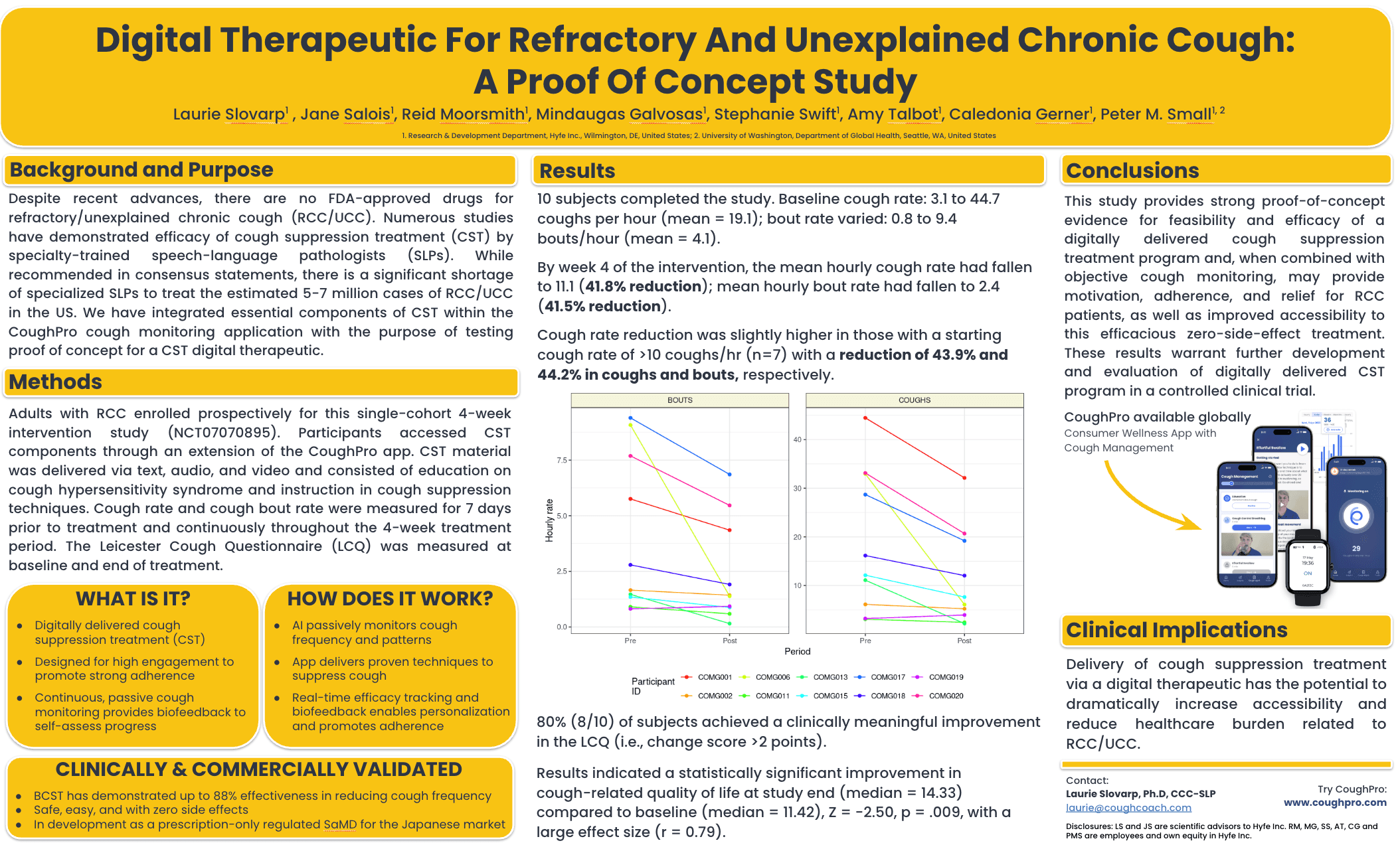
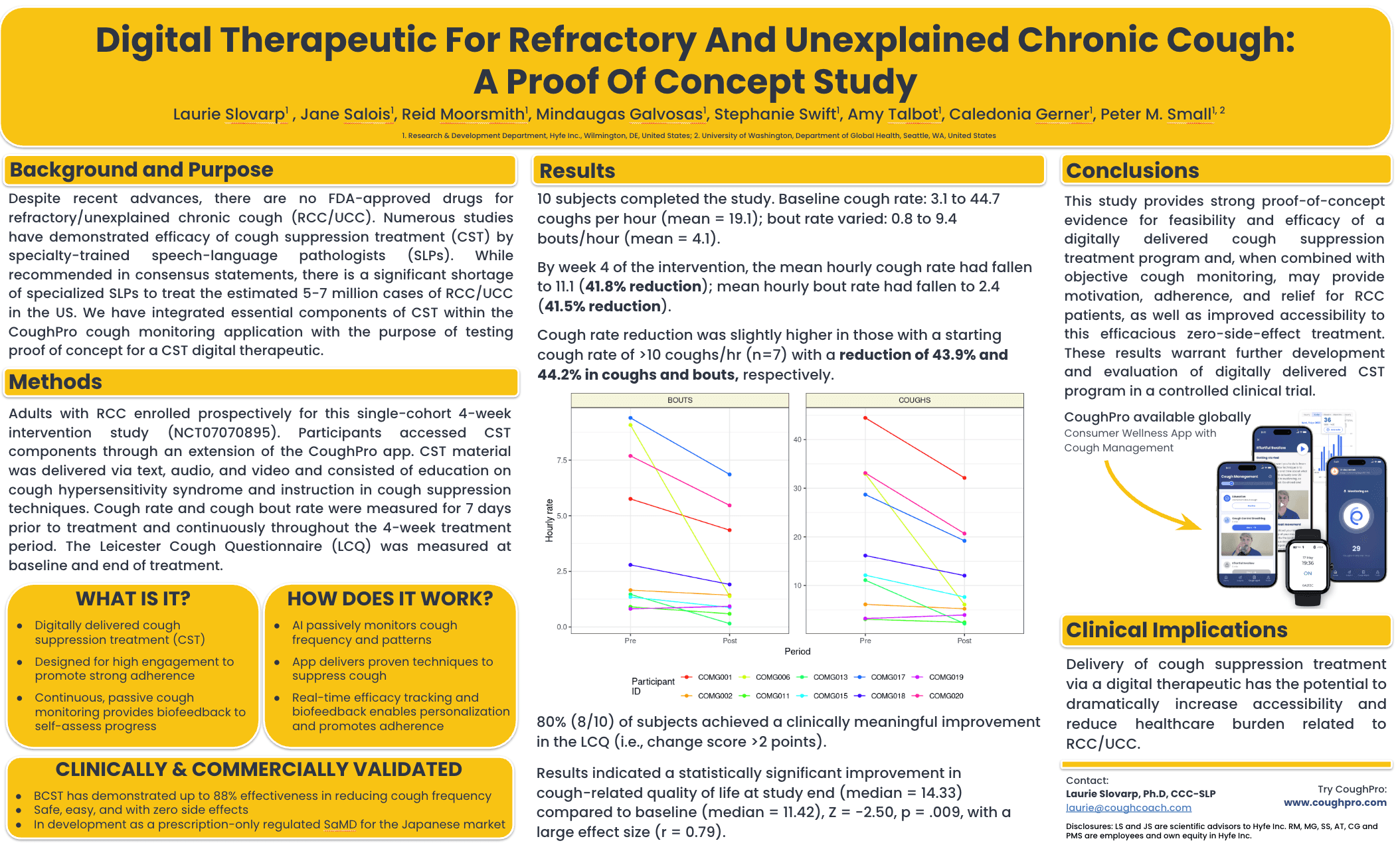
At CHEST 2025, held in Chicago, Illinois, Laurie Slovarp, PhD, CCC-SLP, professor at the University of Montana and certified speech pathologist, presented a poster on the development of a digital therapeutic designed to improve access to behavioral cough suppression therapy for patients with refractory chronic cough.
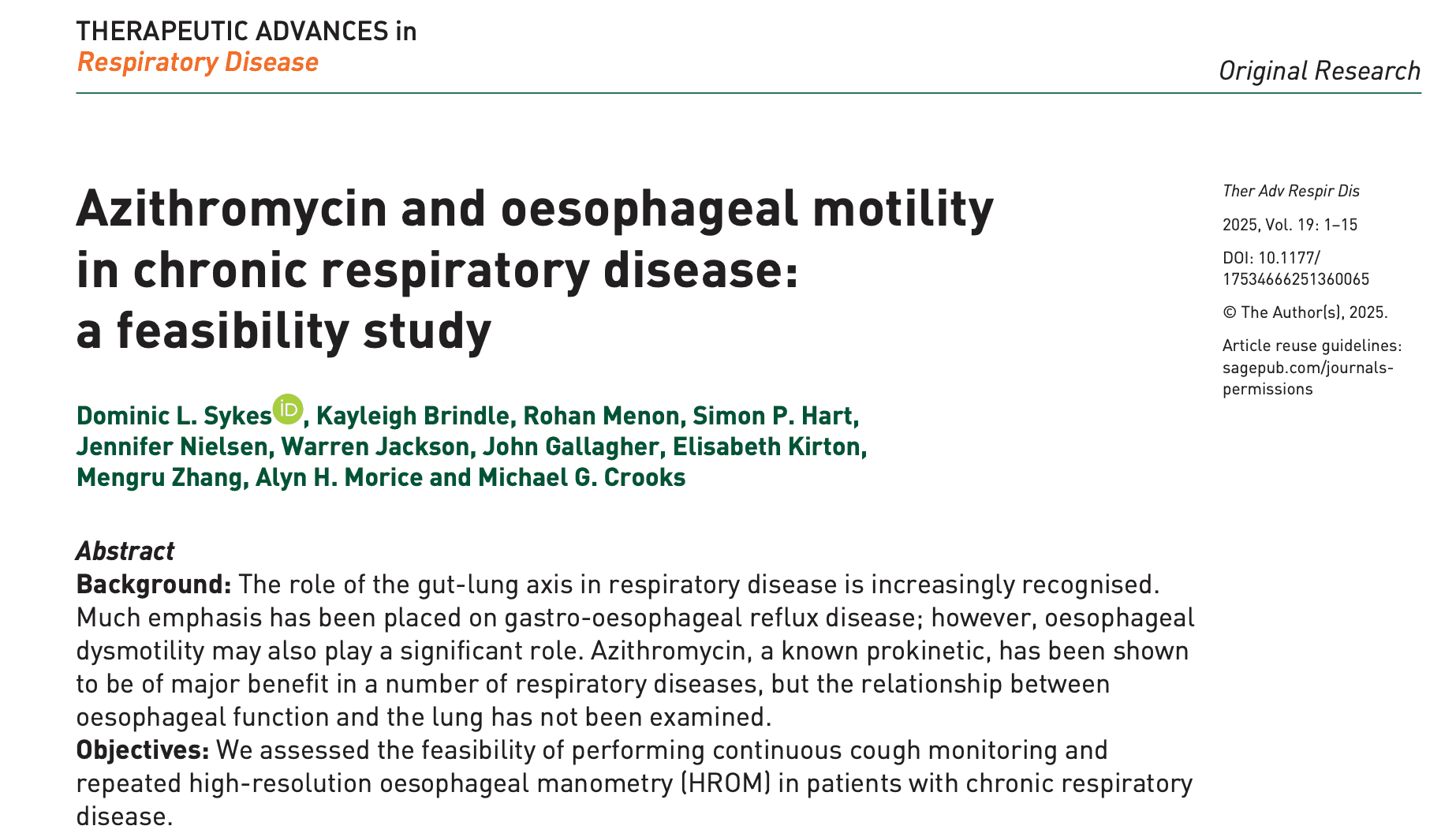
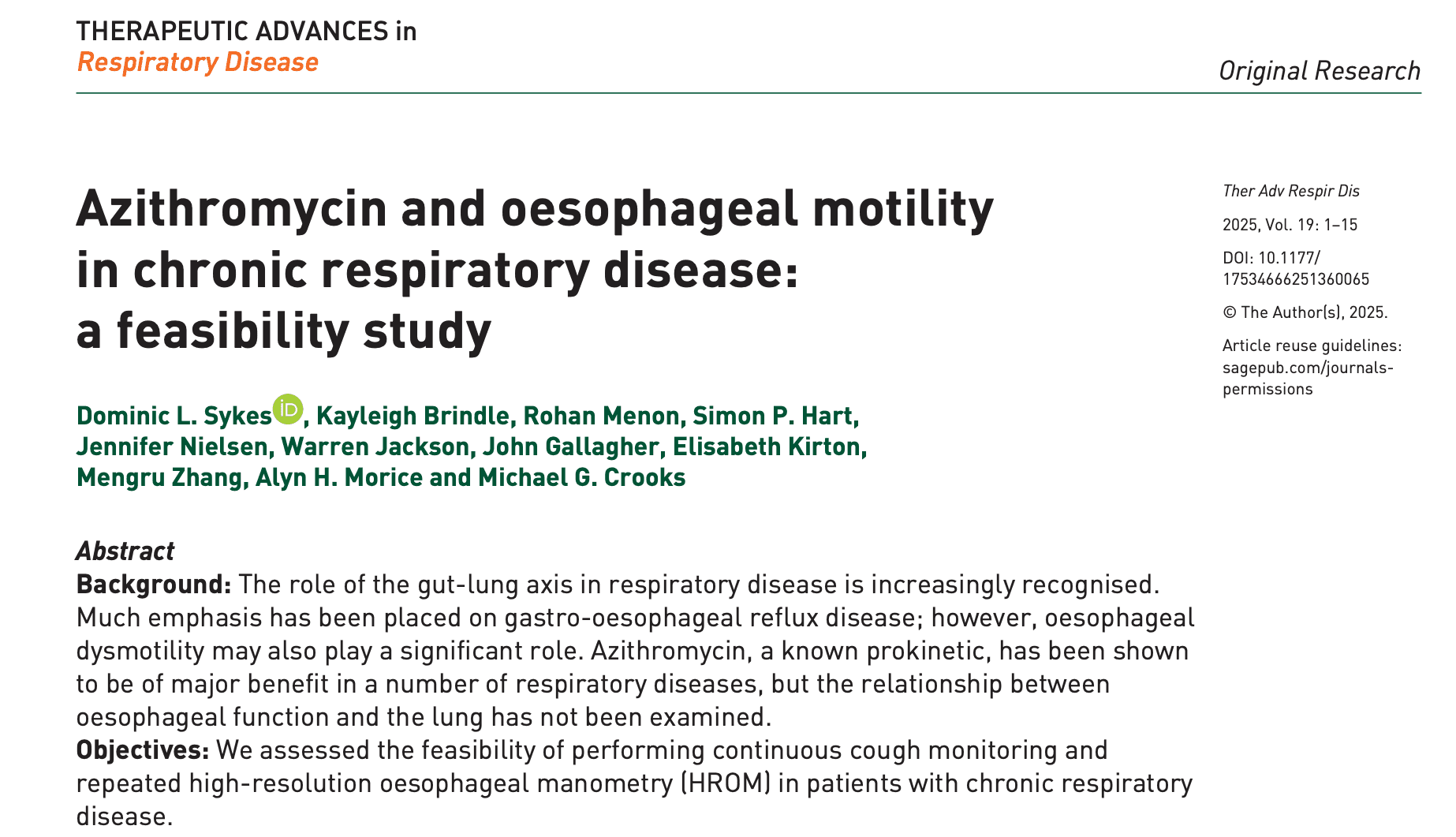
A large-scale trial examining the effect of azithromycin on the relationship between oesophageal function and cough as evaluated by Hyfe's cough monitoring technology in respiratory disease is feasible and acceptable to patients.
This study used Hyfe's wearable cough monitor during a 7-day run in, 28-day treatment, and 14-day follow-up period in patients with chronic bronchitis.
Periods of intense coughing (termed bouts, epochs or bursts) are particularly problematic for some coughers and may not be reflected by simply counting the number of coughs per day. This study explored how varying the definition of bouts yield different impressions of cough severity.
01.10.2024
Hyfe identifies and timestamps coughs thus providing continuous hourly cough counts. Hyfe uses the device's microphone and a two-layer AI system: (1) peak-detection, (2) cough classification, to detect and classify "cough-like" sounds on-device in a privacy preserving way. The retrospectively analyzed dataset was comprised of 97 participants, who monitored for 30 days, with >20 daily monitoring hours and a cough frequency >5 coughs per hour. The data, gathered between January and August 2023, included only cough timestamps and device usage times, with no additional user information.
We calculated daily cough frequencies by dividing total daily coughs by monitoring time and applied bootstrapping to hourly counts to establish 95% confidence intervals for each day. In assessing cough predictability, we calculated One Day's Predictability as the percentage of other days with cough frequencies within that day's 95% confidence interval. Overall Predictability, the mean of these percentages across 30 days, reflects the predictability of 24 hour monitoring. High values indicate a stable and predictable cough pattern, while low values suggest variability from day to day, and thus that 24 hour monitoring in inaccurate.
The mean (median) daily cough rates varied from 6.5 to 182 (6.2 to 160) coughs per hour, with standard deviations (interquartile ranges) varying from 0.99 to 124 (1.30 to 207) coughs per hour among all subjects. There was a positive association between cough rate and variability, as subjects with higher mean cough rates (OLS)have larger standard deviations. The accuracy of any given day for predicting all 30 days is the One Day Predictability for that day, defined as percentage of days when cough frequencies fall within that day’s 95% confidence interval. Overall Predictability was the mean of the 30 One Day Predictability percentages and ranged from 95% (best predictability) to 30% (least predictability).
Limitations: The clinical data was not available for most of the subjects. Although the cough detection algorithms have been extensively tested, their performance has not been validated for this use case.
Take-Home Points: