62
Research Trials
22
Peer-reviewed publications
17
Clinical Conditions
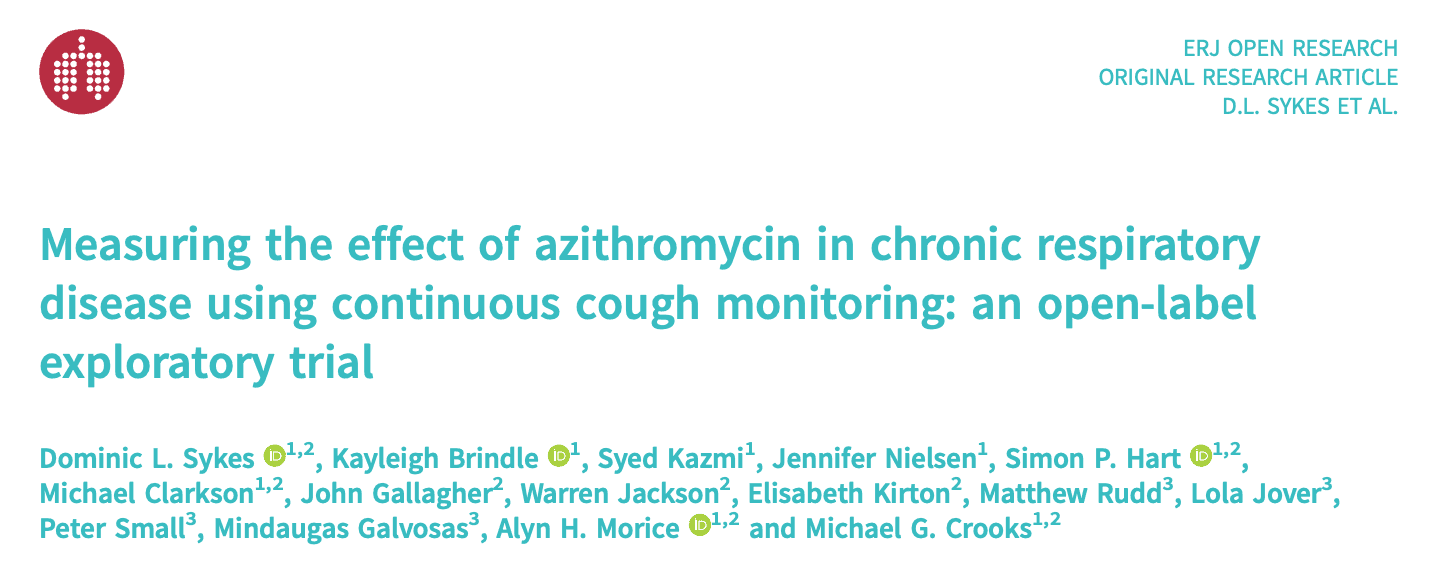
First study to assess the antitussive effect of a drug using continuous cough monitoring, tracking patients on a Hyfe-enabled smartwatch for five weeks around the start of azithromycin.

External validation of the CODA TB DREAM Challenge cough-only models in an independent Peruvian cohort recorded with the Hyfe Research app, showing reduced performance outside the original training populations.
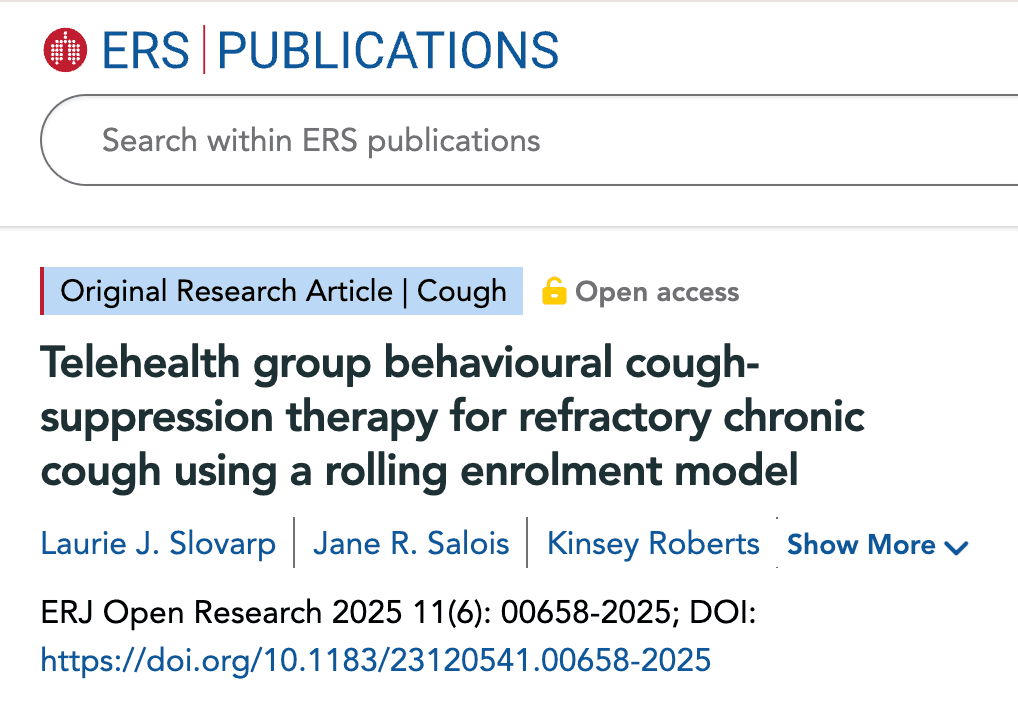
Pilot cohort study of behavioural cough suppression therapy delivered to small telehealth groups with rolling enrolment, with exploratory objective cough monitoring using Hyfe’s CoughPro app.
22 June 2026
Long-term azithromycin is widely used across chronic respiratory diseases, but its effect on cough has been studied mainly with patient-reported measures or 24-hour cough counts at isolated time points, an approach vulnerable to the high day-to-day variability of cough. This open-label, single-arm exploratory trial at Hull York Medical School asked whether continuous objective monitoring could capture the antitussive response to azithromycin over an extended treatment period.
Thirty adults with cough-predominant chronic respiratory disease (refractory chronic cough, interstitial lung disease, COPD or asthma) wore a smartwatch running Hyfe’s cough detection algorithm for one week before and four weeks after starting azithromycin 250 mg daily. Primary analysis compared average cough frequency at week 4 with the pretreatment baseline. Secondary analyses included patient-reported outcomes, a daily cough severity diary, and two bout-based metrics: “relief of cough” (the proportion of monitored time free of coughing episodes) and “cough density”.
Four in five participants met the predefined adherence threshold of more than 12 hours of monitoring per day on at least 90% of study days. Cough frequency fell significantly, from a geometric mean of 11.4 to 7.5 coughs per hour, with a reduction visible from the first week of treatment and continuing through week 4. Seven of 24 adherent participants more than halved their cough rate. The proportion of time relieved of cough rose from 74% to 81%, while cough density did not change significantly. All patient-reported measures, including the Leicester Cough Questionnaire, also improved. Notably, daily cough severity scores showed no meaningful correlation with daily objective cough counts in most participants, underlining the gap between subjective and objective assessment.
The authors describe this as the first study to measure a drug’s antitussive effect with continuous cough monitoring. Because the trial had no control group, the results can’t rule out placebo or regression to the mean, and a randomized trial is needed to confirm efficacy. The study does show that prolonged wearable monitoring is feasible and well tolerated, and that it gives a more granular view of treatment response than conventional 24-hour counts. Hyfe provided the monitoring devices, and Hyfe’s Matthew Rudd, Lola Jover, Peter Small and Mindaugas Galvosas are co-authors.