Get expert insights into cough science, monitoring and research

“CDRH clearance is neither necessary nor sufficient for CDER to accept a cough monitor as a trial endpoint. The two run on independent tracks.”
“CoughPro passively captured 23,445 hours of real-world cough from 206 coughers, then layered structured survey data on top.”
Partner: A leading global consumer healthcare company (OTC respiratory portfolio) Project type: Prospective, observational feasibility study Therapeutic area: Acute and chronic cough Platform: CoughPro (app-based passive cough detection + in-app daily cough severity diary) Setting: UK community sample, no clinical sites, no site staff, no devices to ship Key takeaway: CoughPro, a consumer smartphone app, passively captured 23,445 hours of real-world cough data and 189,723 coughs from 206 coughers, then layered structured survey data on top, generating a more complete view than either data stream provides on its own.
The partner sells OTC cough products but, like most of the category, had only subjective, periodic, recall-based tools to understand how people actually cough in daily life. Patient-reported outcomes and symptom diaries capture what people think, feel, and believe about their cough, all important to how cough affects daily life and well-being; however, they say nothing reliable about what is objectively occurring as a biological finding. The partner wanted to know two things a consumer app might answer that surveys alone cannot: what does cough actually look like across a population of people with acute and chronic cough, and how well does what people report line up with what a device measures?
Crucially, they wanted this without the overhead of a clinical trial. The test was whether a familiar smartphone app, used by ordinary people in their own homes, could generate research-grade real-world insight at scale.
Hyfe supported the study remotely on the CoughPro wellness app. Participants were recruited from an online community panel across two clinically distinct groups: acute coughers and chronic coughers, installed the app themselves, and let it run day and night passively for a seven-day window. Two data streams ran in parallel through a single consumer app:
The footprint was deliberately light: an easy-to-use consumer app, quietly generating a real-world cough dataset, enriched with questionnaires designed to capture subjective experience of cough and texture to the passive monitoring data.
Note on adherence
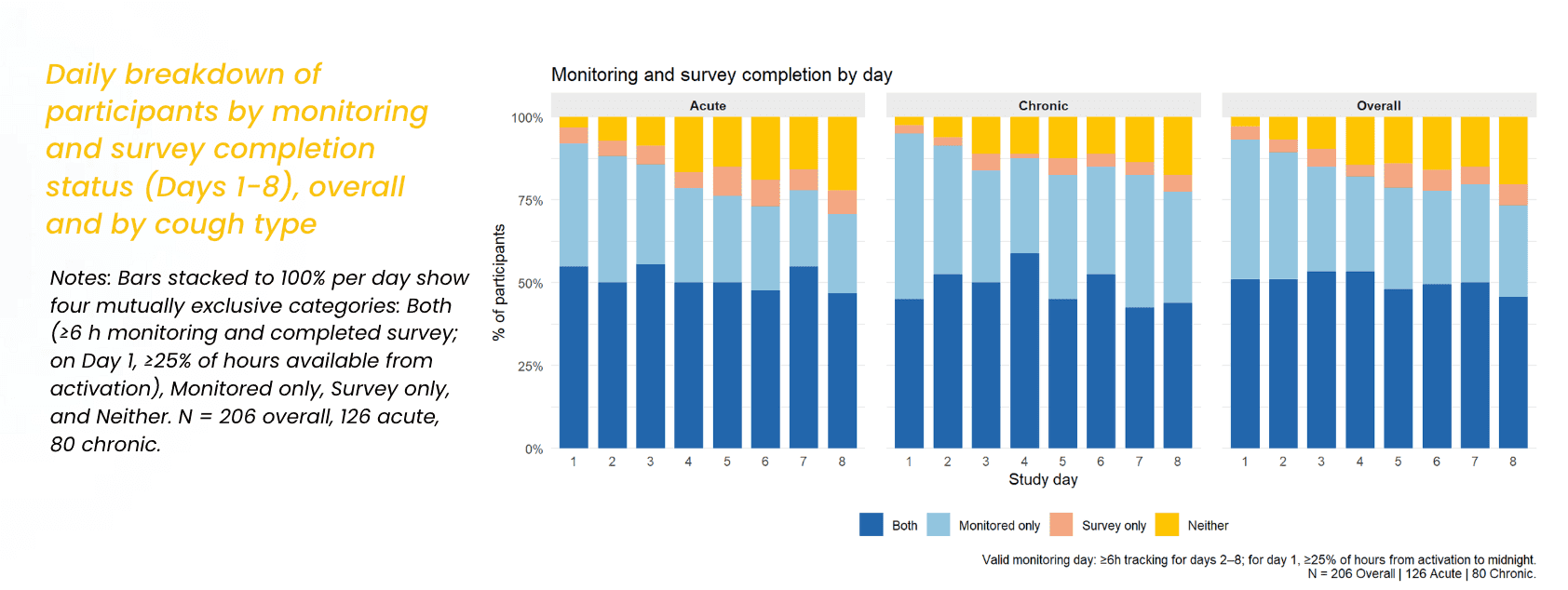
This was a feasibility study with no engagement tooling switched on. Even so, passive monitoring adherence held above 60% and beat survey completion rates throughout. Levers that typically lift that number (notifications, streaks, goal visualisations, onboarding guidance) are all capabilities within CoughPro that have been shown to achieve adherence of 95% of available hours in other Hyfe studies.
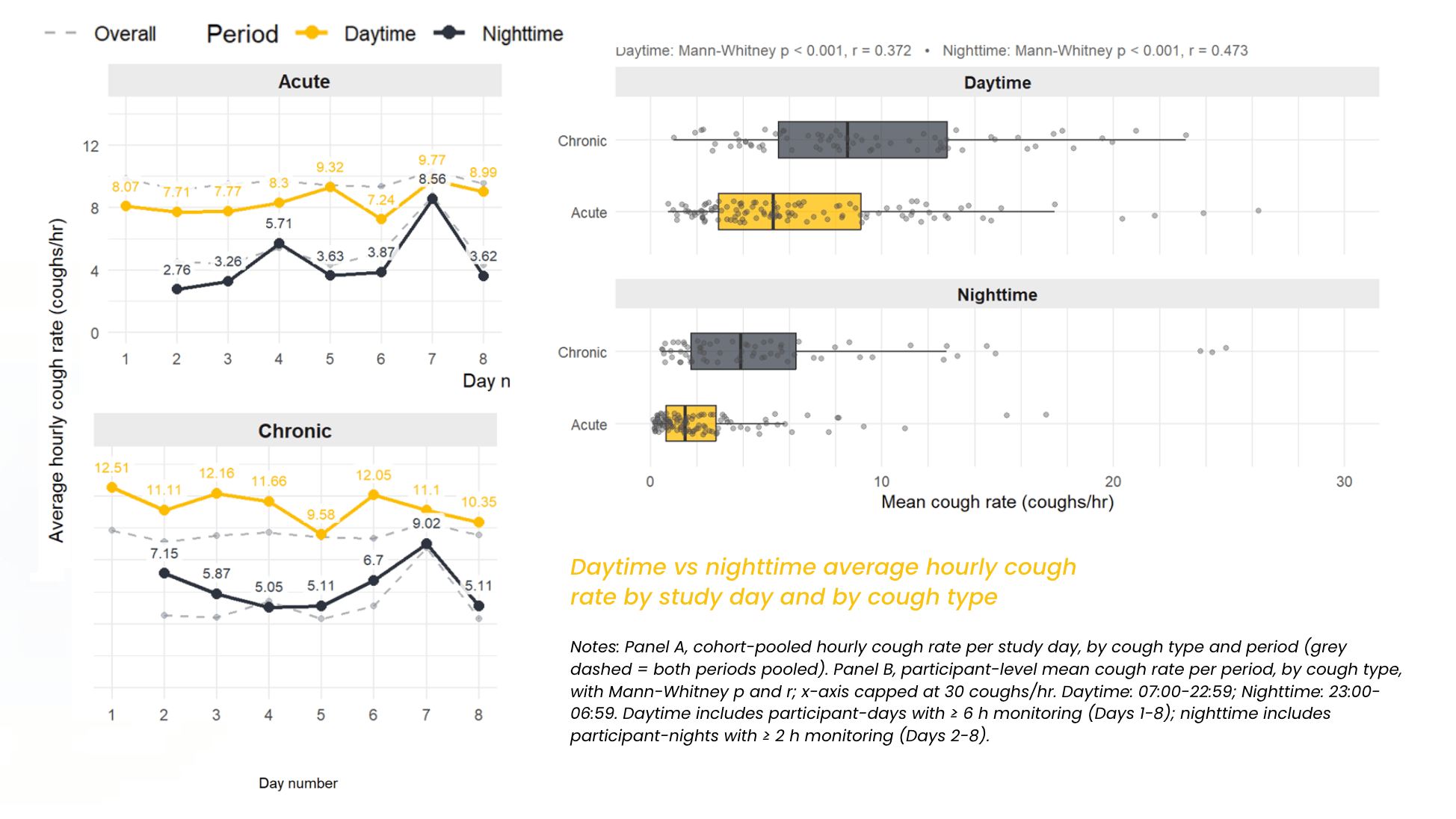
Objective cough data that surveys can't produce. From ordinary app use, CoughPro insights showed cough frequency day-by-day, split it into daytime and nighttime windows, and quantified coughing bouts, a continuous, real-world signal that no diary or once-daily symptom scale can collect.c
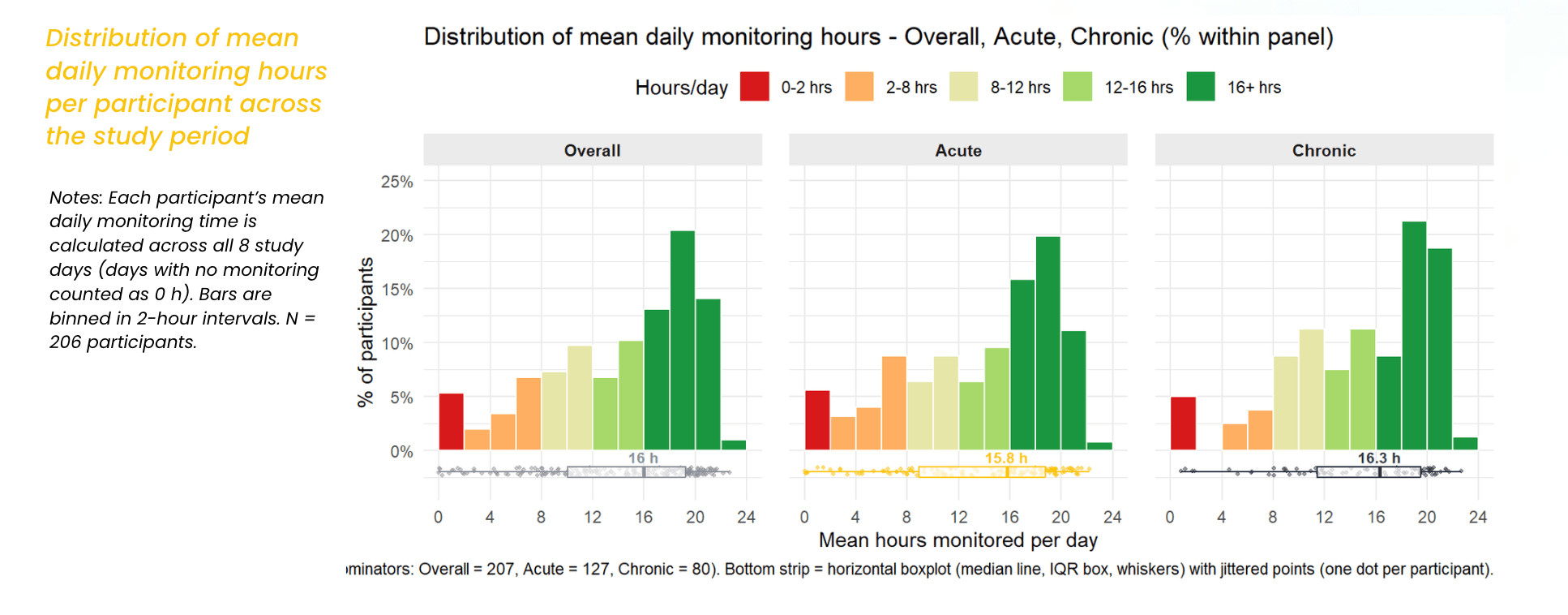
Granular breakdown of monitoring behavior. Ability to link adherence levels to other measures of interest, such as cough frequency, perceived burden, or health-seeking measures of interest, such as need states and intention to treat.
A population you can actually characterize and segment. Objective data cleanly separated chronic from acute coughers, and the dataset supported segmentation by phenotype, by demographics (age, smoking/vaping status), and by engagement level. That is the raw material for personas, archetypes, and targeted messaging, grounded in measured behavior.
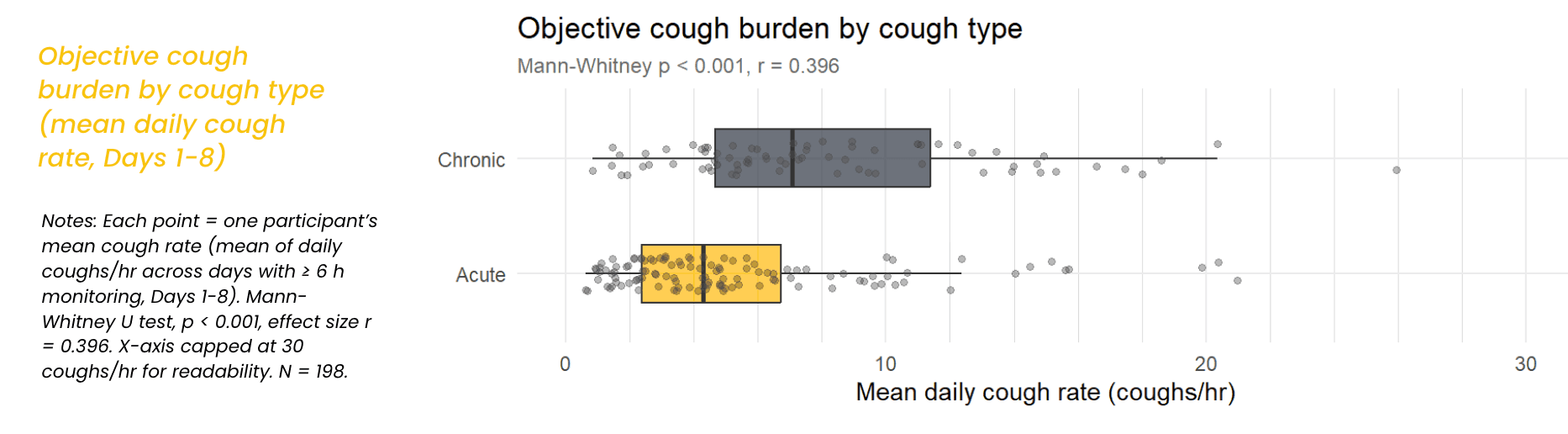
Engagement insight. Because monitoring is passive, the study revealed who sustains tracking and who drops off, how that varies by age and gender, and that passive monitoring help up better than active surveys on every single day. For any partner trying to understand which users are motivated and what keeps them engaged, that behavioral signal is built in.
Structured context layered on top, on demand. Embedded questionnaires captured demographics, baseline clinical characteristics (smoking/vaping, phlegm), and daily treatment use. The same agile, flexible toolset can carry whatever a partner needs to learn about their users.
Engagement insight. Because monitoring is passive, the study revealed who sustains tracking and who drops off, how that varies by age and gender, and that passive monitoring held up better than active surveys on every single day. For any partner trying to understand which users are motivated and what keeps them engaged, that behavioral signal is built in.
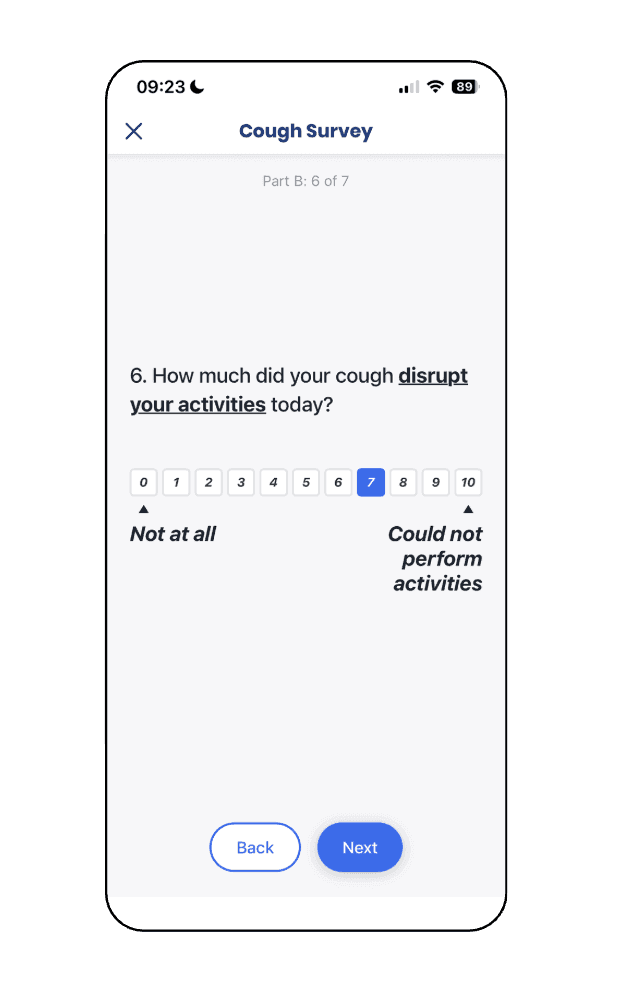
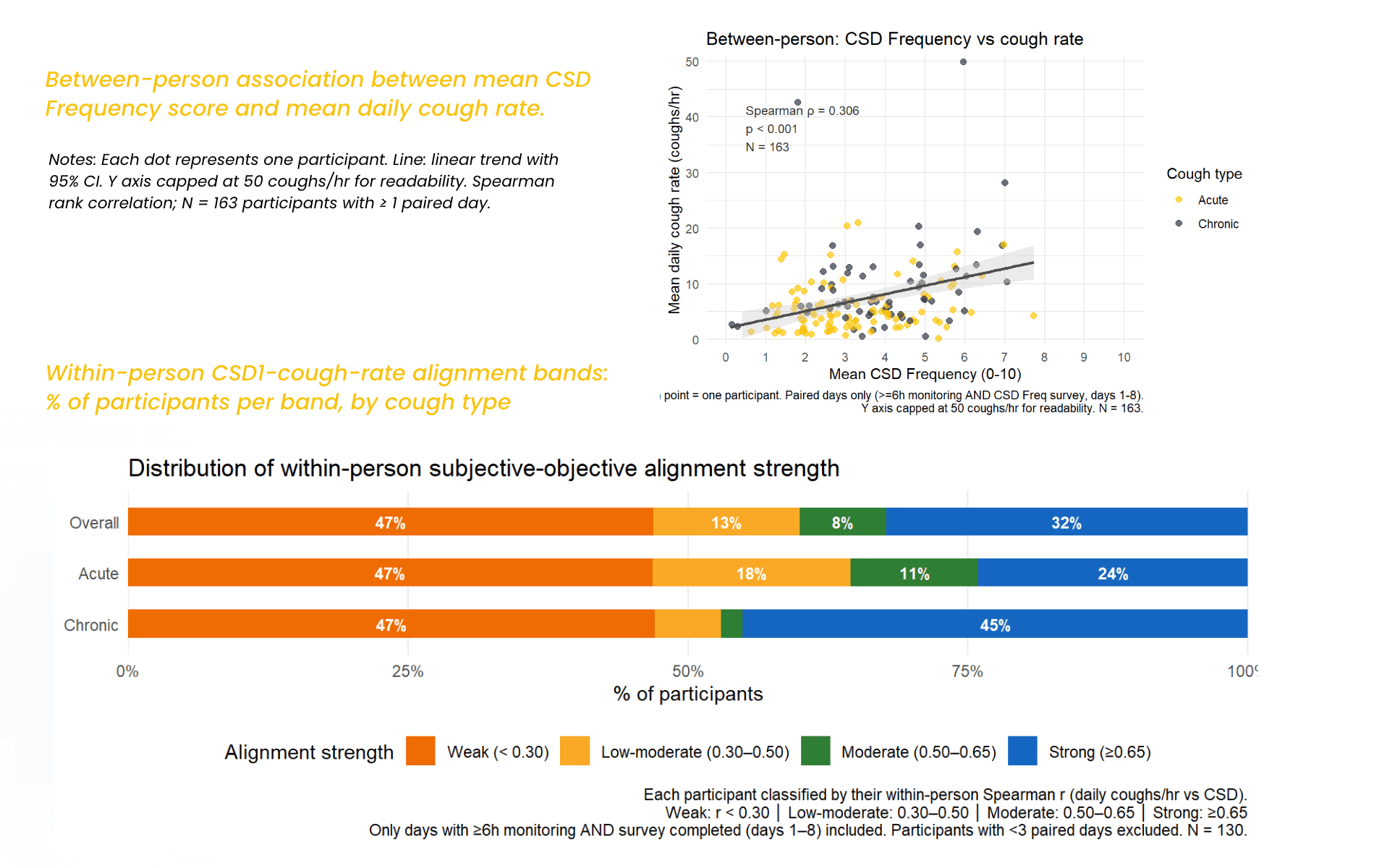
Qualitative and quantitative, from the same users at the same time. Because CoughPro runs passive monitoring and the daily diary through one app, every participant generates both an objective record of what their cough actually did and a subjective record of how they experienced it, day by day, paired. Most approaches force a choice between the two, or collect them from different sources at different times. Here you get both, linked at the person-day level, so you can see not just how much someone coughed but how that lines up with how they felt, and where the two diverge.