53
Research Trials
20
Peer-reviewed publications
16
Clinical Conditions
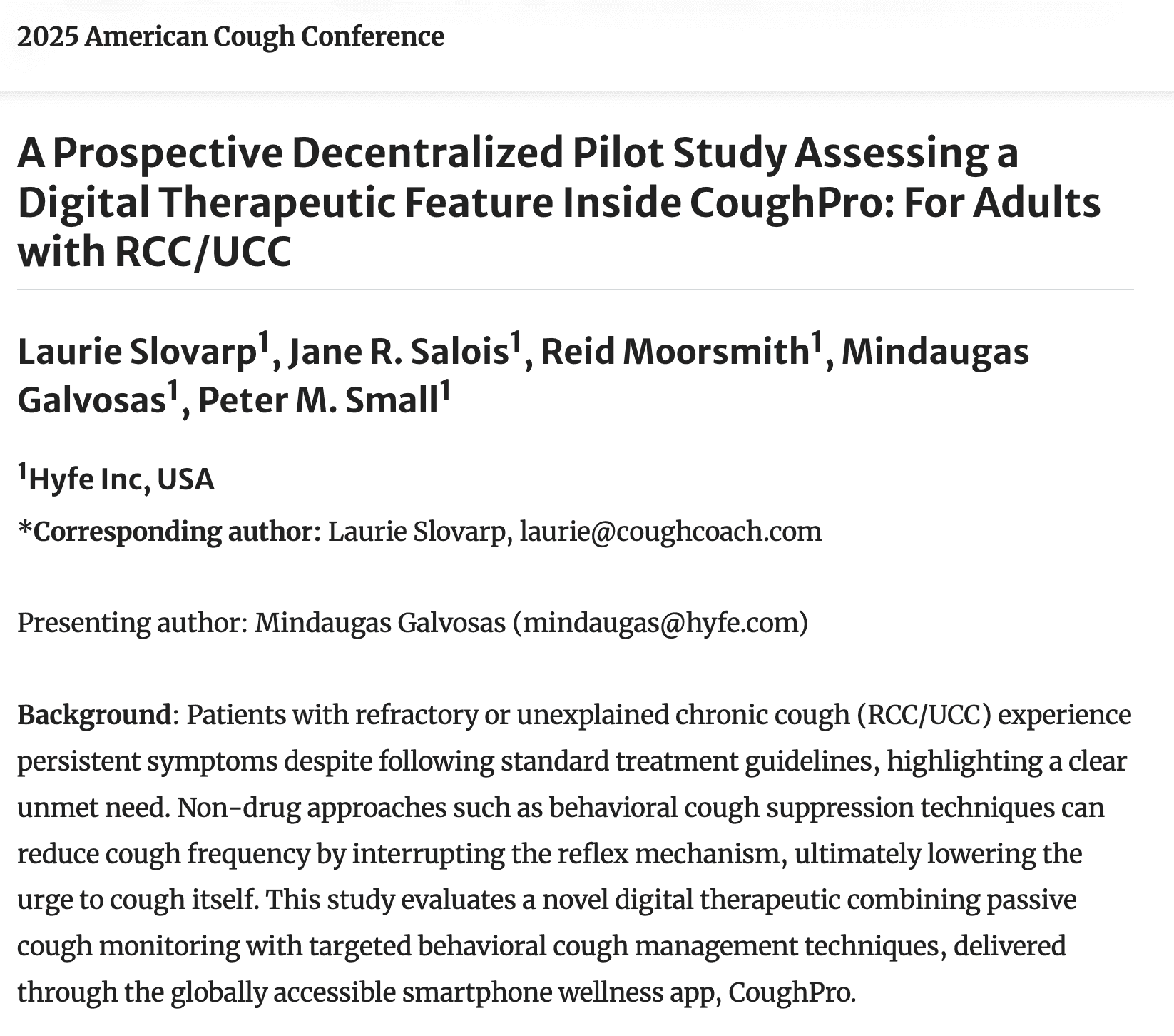
Hyfe pilot study tests a digital therapeutic combining passive cough monitoring with behavioral suppression techniques delivered through the CoughPro app.
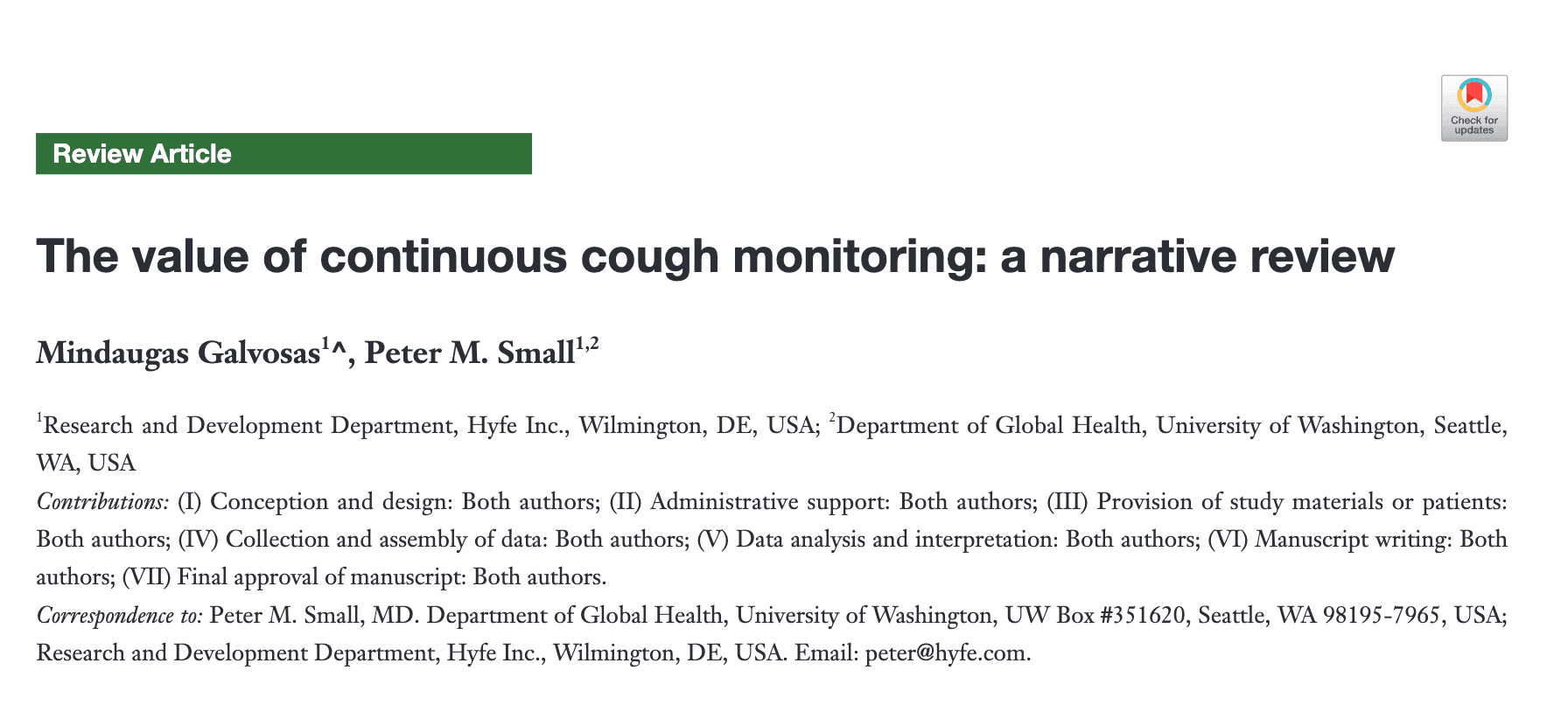
This narrative review by Hyfe's R&D team makes the case that continuous cough monitoring (CCM), powered by acoustic AI, transforms cough from a subjective symptom into a quantifiable digital biomarker.
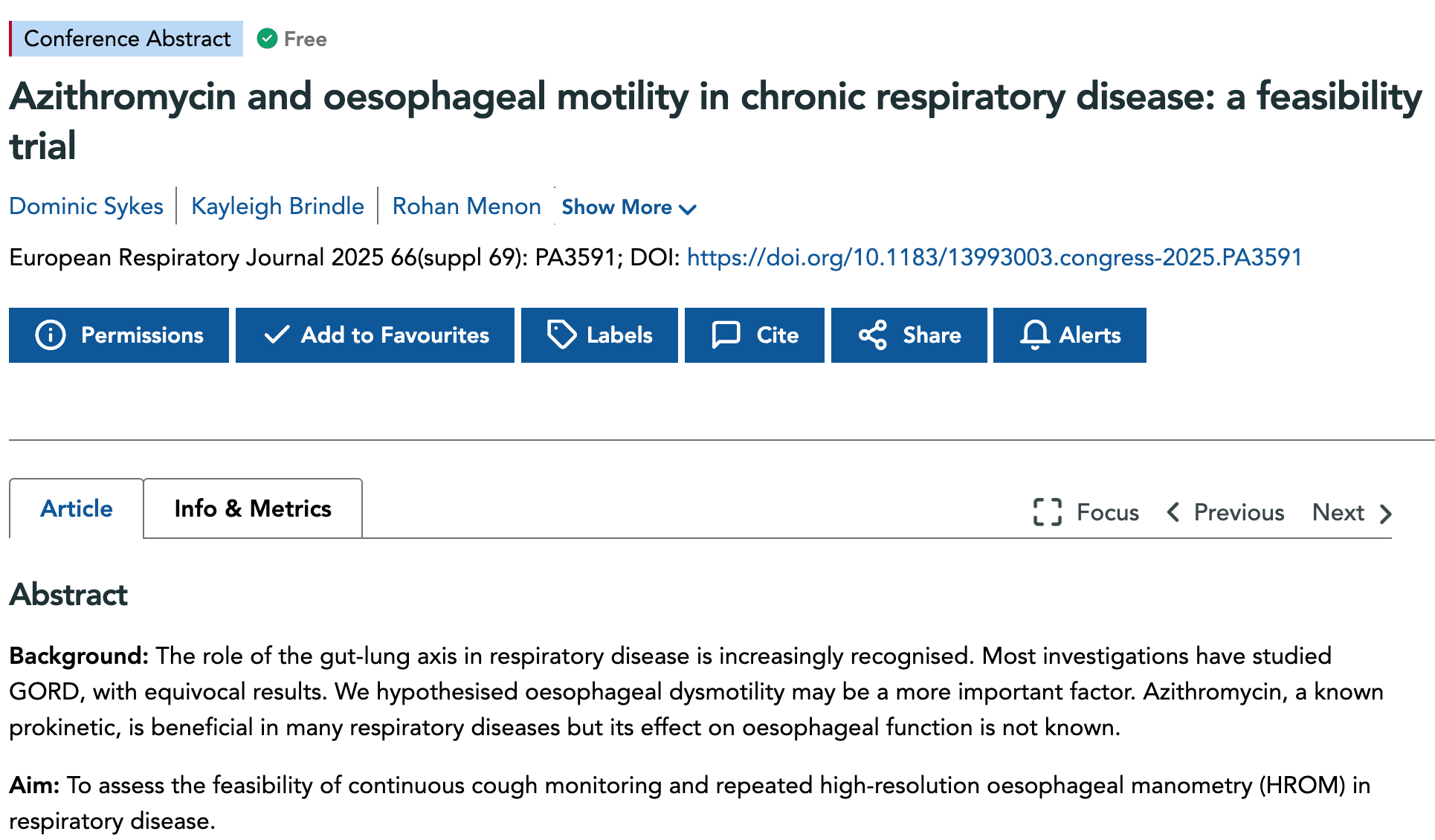
Independent ERS 2025 NeuroCOUGH trial uses the Hyfe Cough Tracker to test feasibility of studying azithromycin's effect on cough and oesophageal motility.
27 February 2024
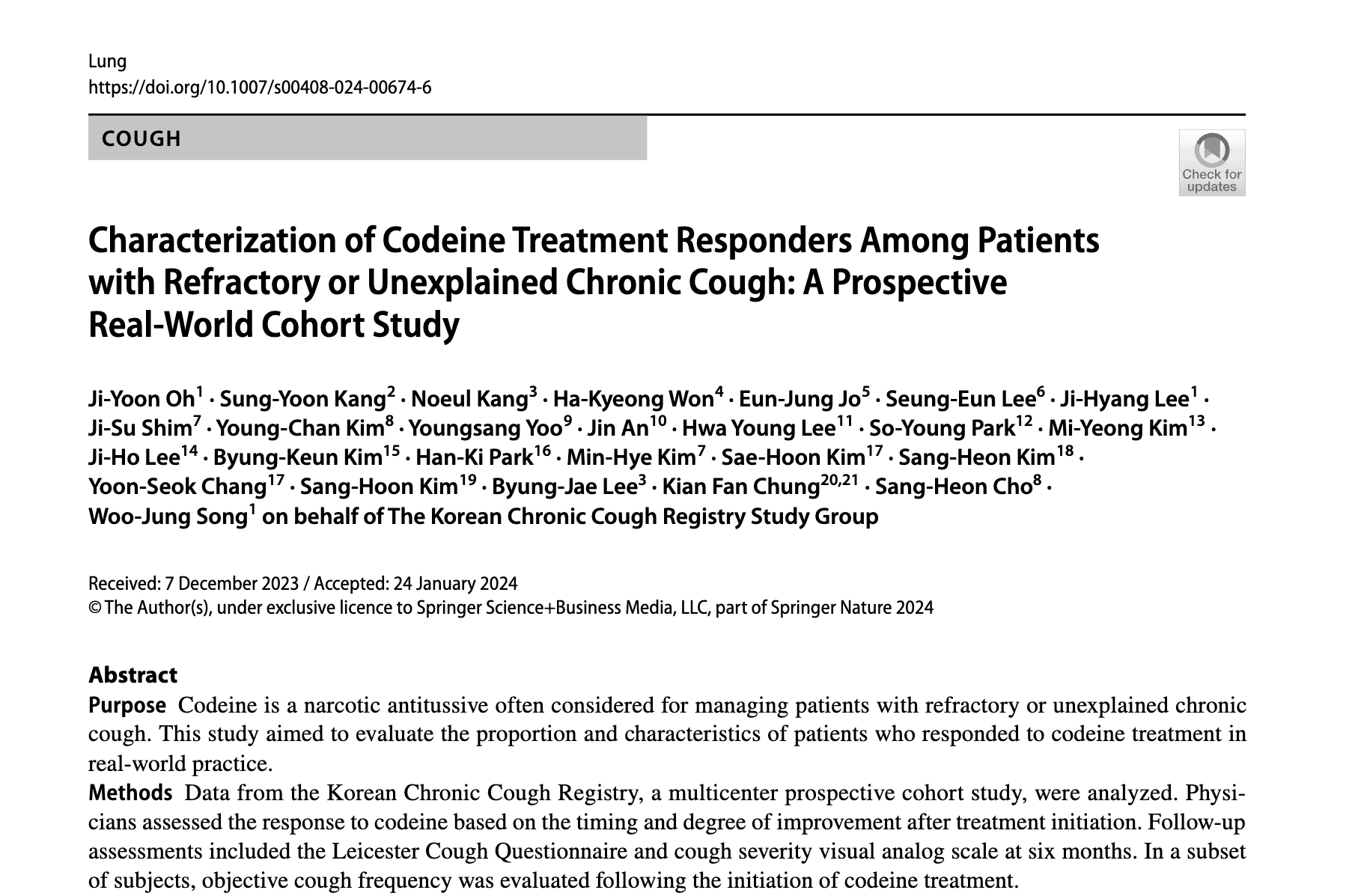
Purpose: Codeine is a narcotic antitussive often considered for managing patients with refractory or unexplained chronic cough. This study aimed to evaluate the proportion and characteristics of patients who responded to codeine treatment in real-world practice.
Methods: Data from the Korean Chronic Cough Registry, a multicenter prospective cohort study, were analyzed. Physicians assessed the response to codeine based on the timing and degree of improvement after treatment initiation. Follow-up assessments included the Leicester Cough Questionnaire and cough severity visual analog scale at six months. In a subset of subjects, objective cough frequency was evaluated following the initiation of codeine treatment.
Results: Of 305 patients, 124 (40.7%) responded to treatments based on anatomic diagnostic protocols, while 181 (59.3%) remained unexplained or refractory to etiological treatments. Fifty-one subjects (16.7%) were classified as codeine treatment responders (those showing a rapid and clear response), 57 (18.7%) as partial responders, and 62 (20.3%) as non-responders. Codeine responders showed rapid improvement in objective cough frequency and severity scores within a week of the treatment. At 6 months, responders showed significantly improved scores in cough scores, compared to non-responders. Several baseline parameters were associated with a more favorable treatment response, including older age, non-productive cough, and the absence of heartburn.
Conclusions: Approximately 60% of chronic cough patients in specialist clinics may require antitussive drugs. While codeine benefits some, only a limited proportion (about 20%) of patients may experience rapid and significant improvement. This underscores the urgent need for new antitussive drugs to address these unmet clinical needs.