53
Research Trials
20
Peer-reviewed publications
16
Clinical Conditions
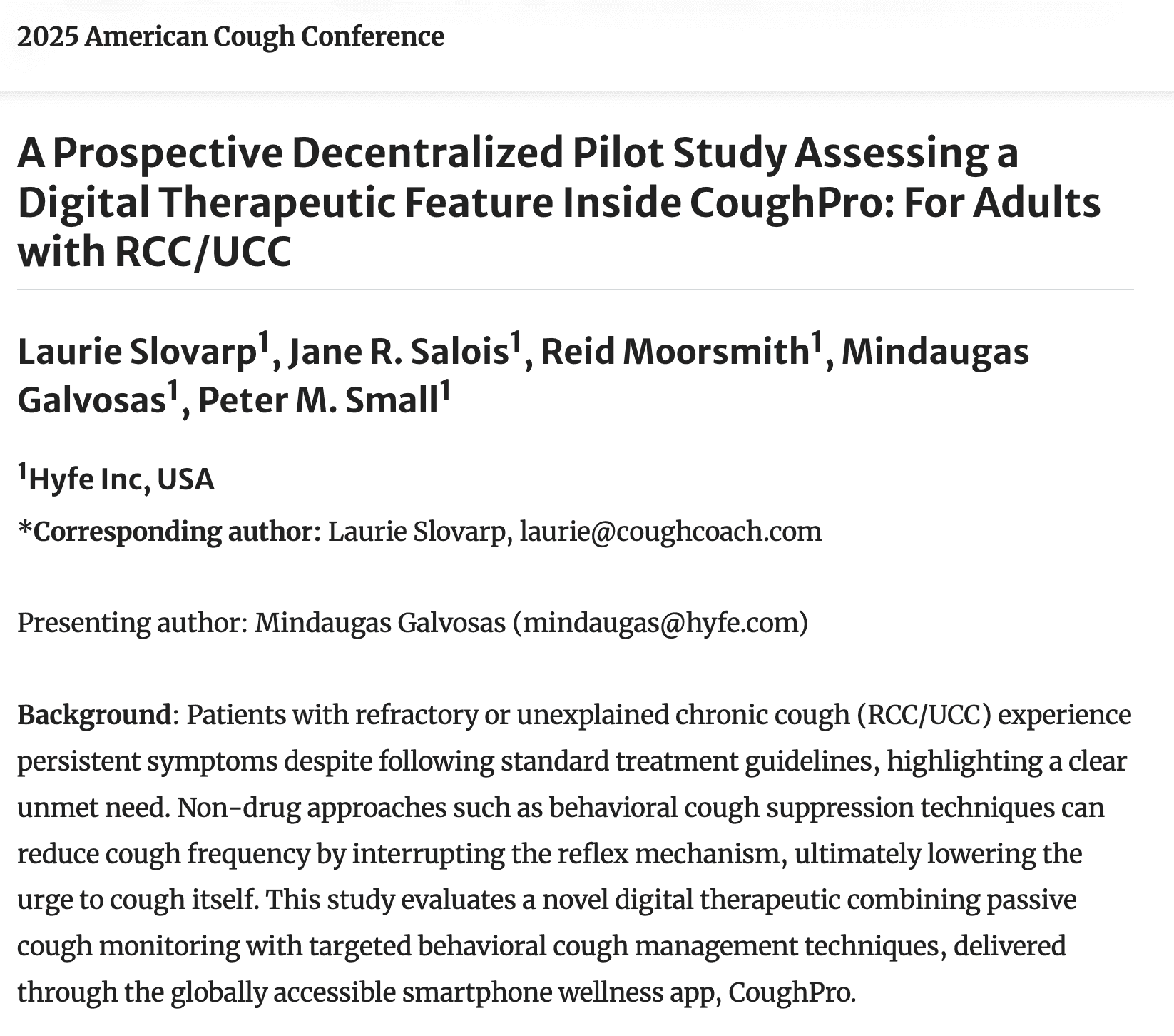
Hyfe pilot study tests a digital therapeutic combining passive cough monitoring with behavioral suppression techniques delivered through the CoughPro app.
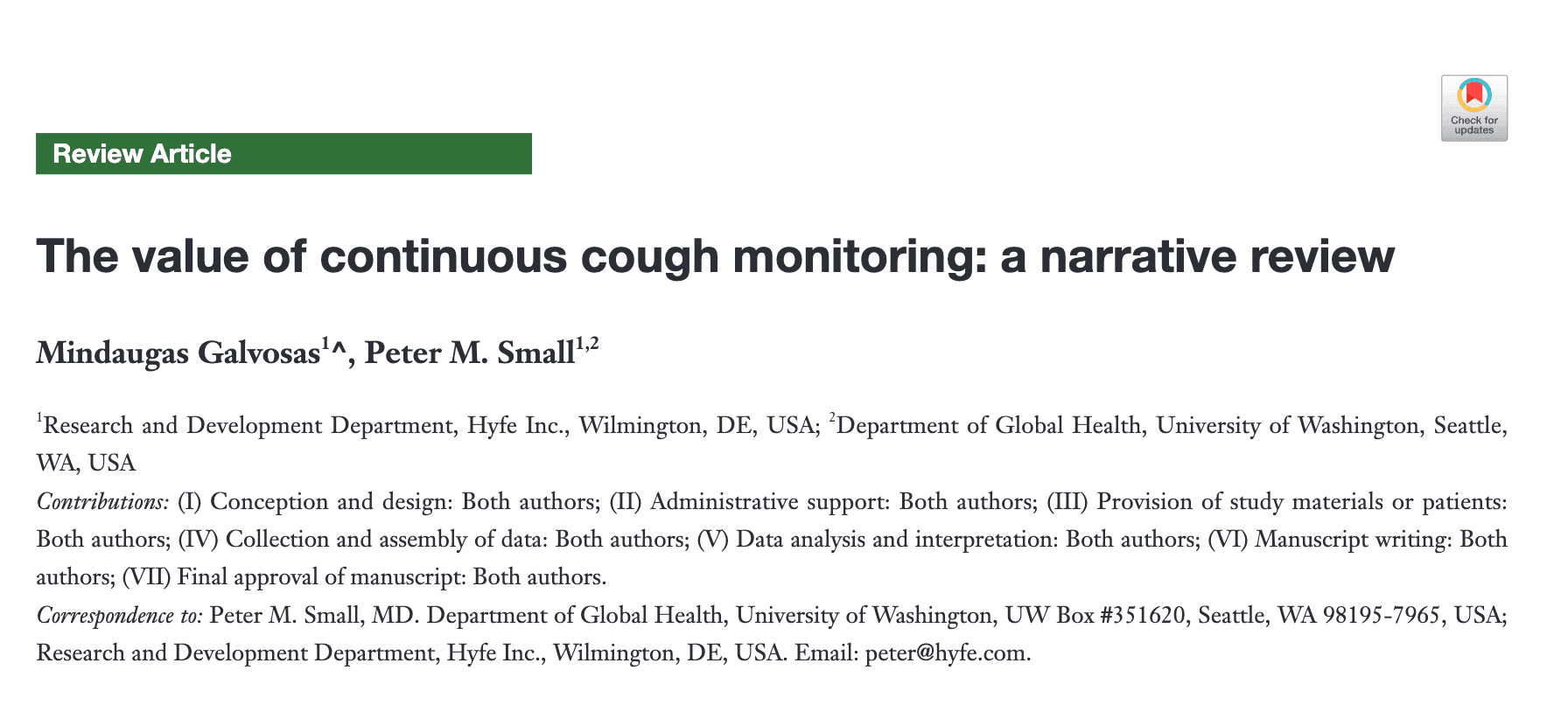
This narrative review by Hyfe's R&D team makes the case that continuous cough monitoring (CCM), powered by acoustic AI, transforms cough from a subjective symptom into a quantifiable digital biomarker.

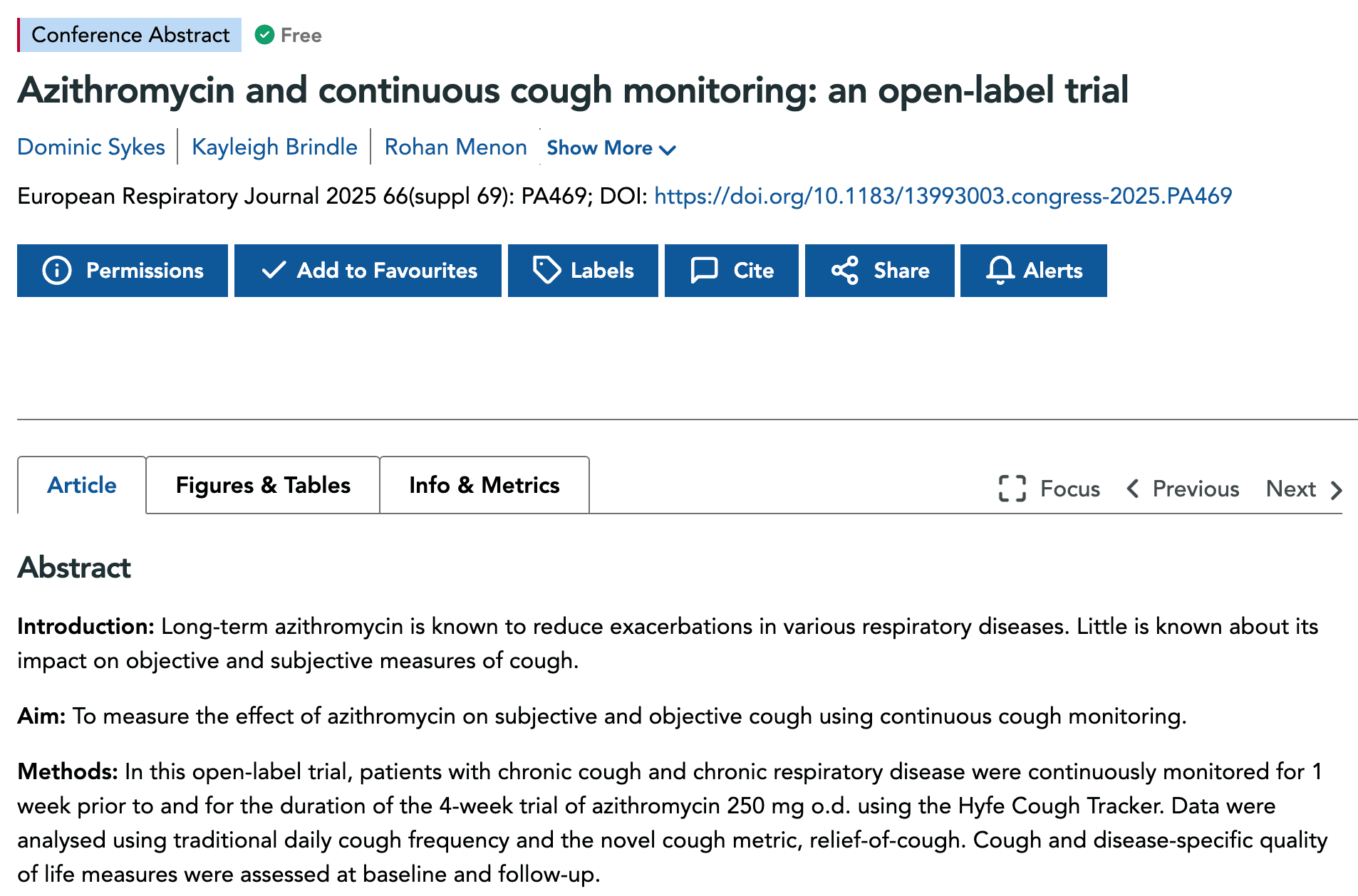
Independent ERS 2025 NeuroCOUGH trial uses the Hyfe Cough Tracker to test feasibility of studying azithromycin's effect on cough and oesophageal motility.
21 October 2025
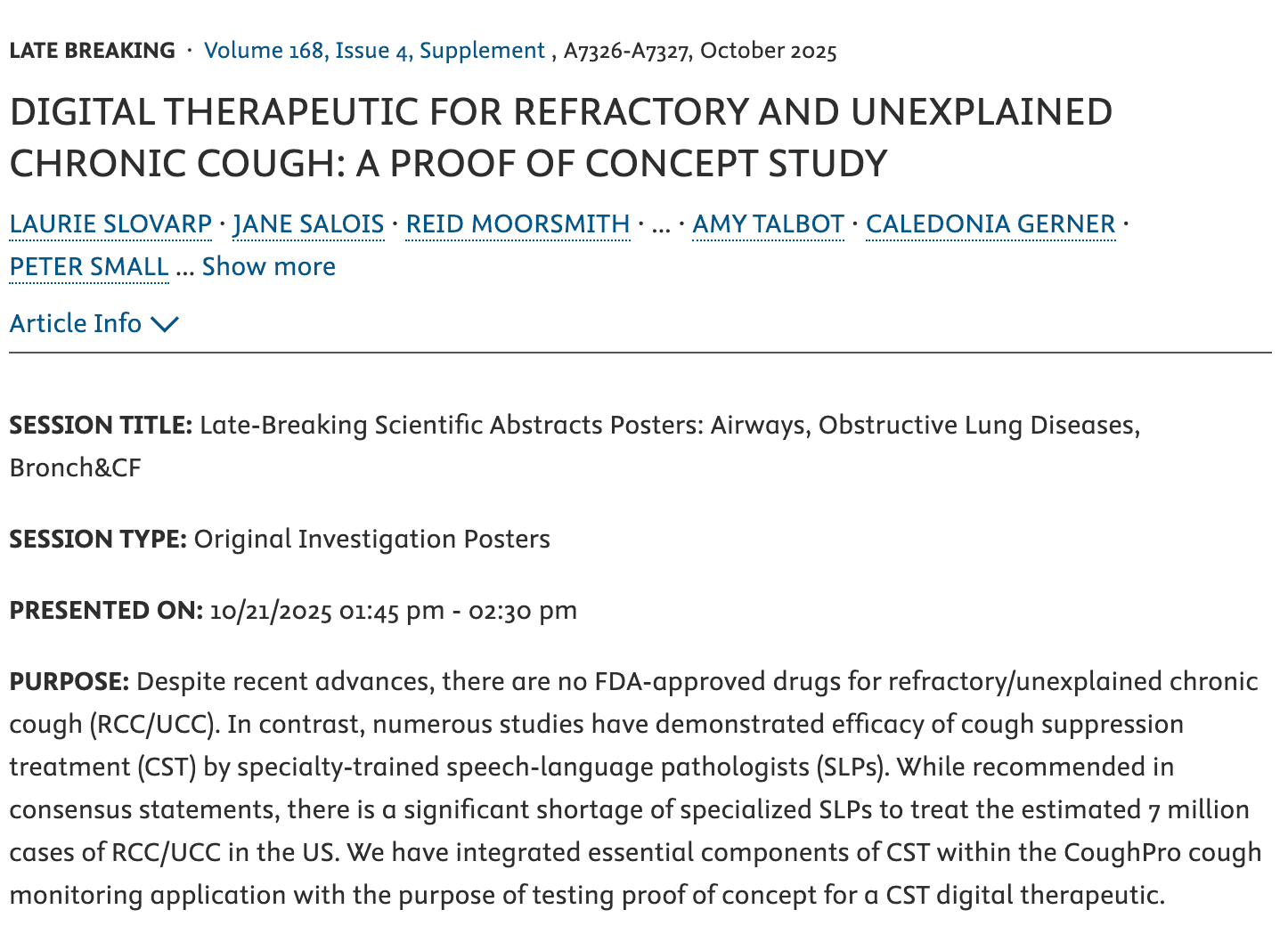
An estimated 7 million adults in the United States live with refractory or unexplained chronic cough, a condition for which no FDA-approved drug therapy exists. Behavioral cough suppression therapy (BCST), delivered by specialty-trained speech-language pathologists, is the most efficacious treatment available, yet the specialist workforce needed to deliver it at scale does not. This study asked whether the core components of BCST could be embedded in a digital therapeutic and paired with continuous, objective cough monitoring inside the CoughPro app.
Ten adults with refractory chronic cough completed a four-week intervention combining education on cough hypersensitivity syndrome with instruction in cough suppression techniques, delivered via text and video modules within the app. Cough rate and cough bout rate were measured continuously for seven days at baseline and across the treatment period; the Leicester Cough Questionnaire (LCQ) was administered pre- and post-treatment.
By week four, mean hourly cough rate had fallen by 41.8% and mean bout rate by 41.5%. Eight of ten participants (80%) achieved a clinically meaningful improvement on the LCQ, with the pre-to-post change reaching statistical significance and a large effect size (p = .009, r = 0.79).
The findings offer the first proof-of-concept that an app-delivered digital therapeutic, pairing behavioral cough suppression with passive, continuous cough monitoring, can approximate outcomes previously achievable only through specialist-led in-person care. The results warrant evaluation in a controlled clinical trial and support the continued development of a prescription digital therapeutic for chronic cough.