64
Research Trials
29
Peer-reviewed publications
17
Clinical Conditions
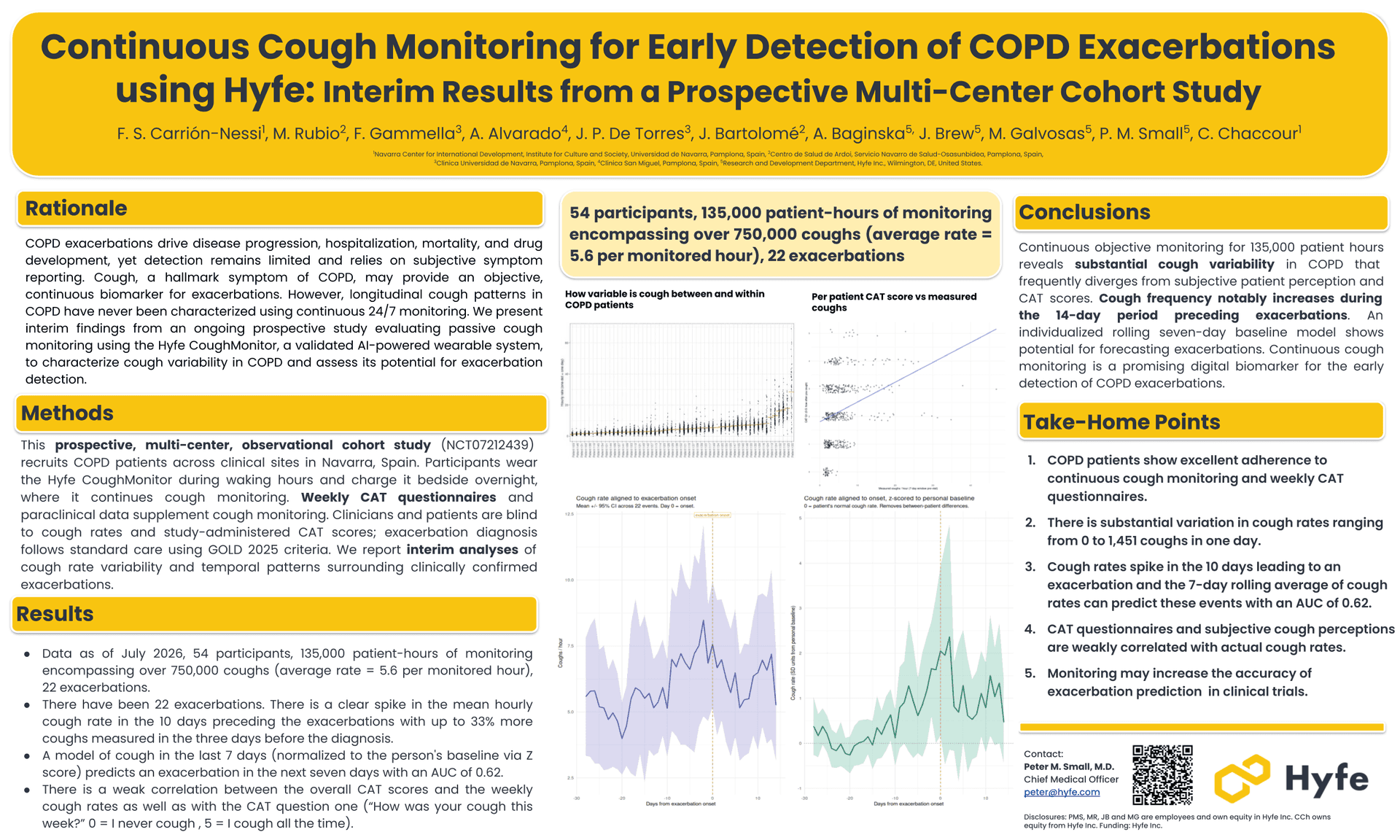
Updated interim data from 54 COPD patients and 135,000 monitored hours, showing cough rates rise in the days before exacerbations and correlate only weakly with CAT scores.
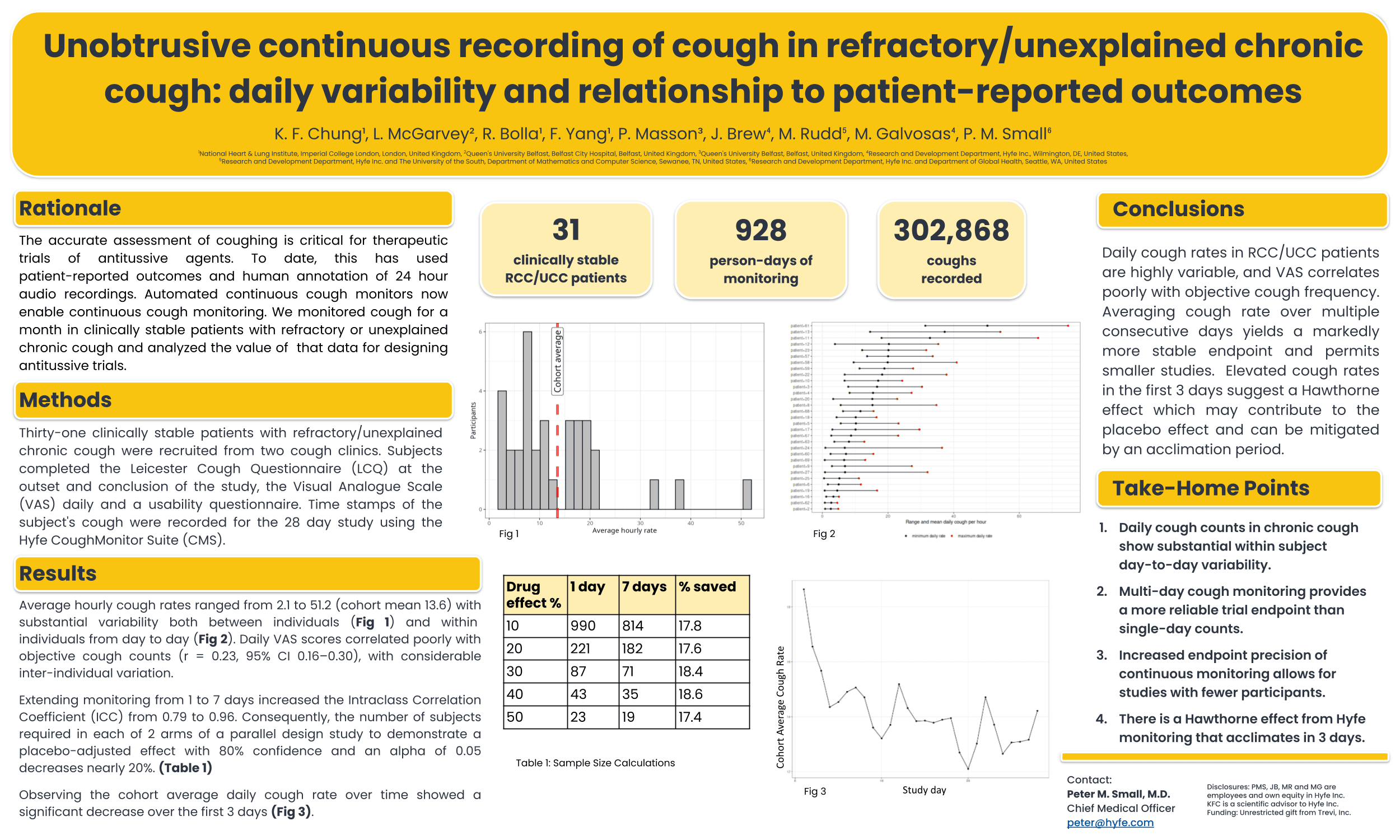
A month of continuous monitoring in stable chronic cough shows that multi-day averaging makes cough frequency a more reliable trial endpoint, allowing smaller studies, and reveals a short-lived Hawthorne effect.
Mixed-methods study in Kampala assessing 48-hour cough frequency monitoring with the Hyfe Research app for TB screening and triage, alongside staff-reported implementation barriers.
28 October 2026
Thirty-one clinically stable patients with refractory or unexplained chronic cough from cough clinics in London and Belfast were monitored for 28 days with the Hyfe CoughMonitor Suite, alongside daily VAS scores and the Leicester Cough Questionnaire.
Cough rates varied substantially between and within individuals, and daily VAS scores correlated poorly with objective counts. Extending monitoring from one to seven days raised the intraclass correlation coefficient from 0.79 to 0.96, which reduces the number of participants needed per arm in a parallel-design trial by nearly 20%. Cohort cough rates were elevated in the first three days of monitoring before settling. This suggests a Hawthorne effect that may contribute to placebo responses and could be mitigated with a short acclimation period.