64
Research Trials
29
Peer-reviewed publications
17
Clinical Conditions
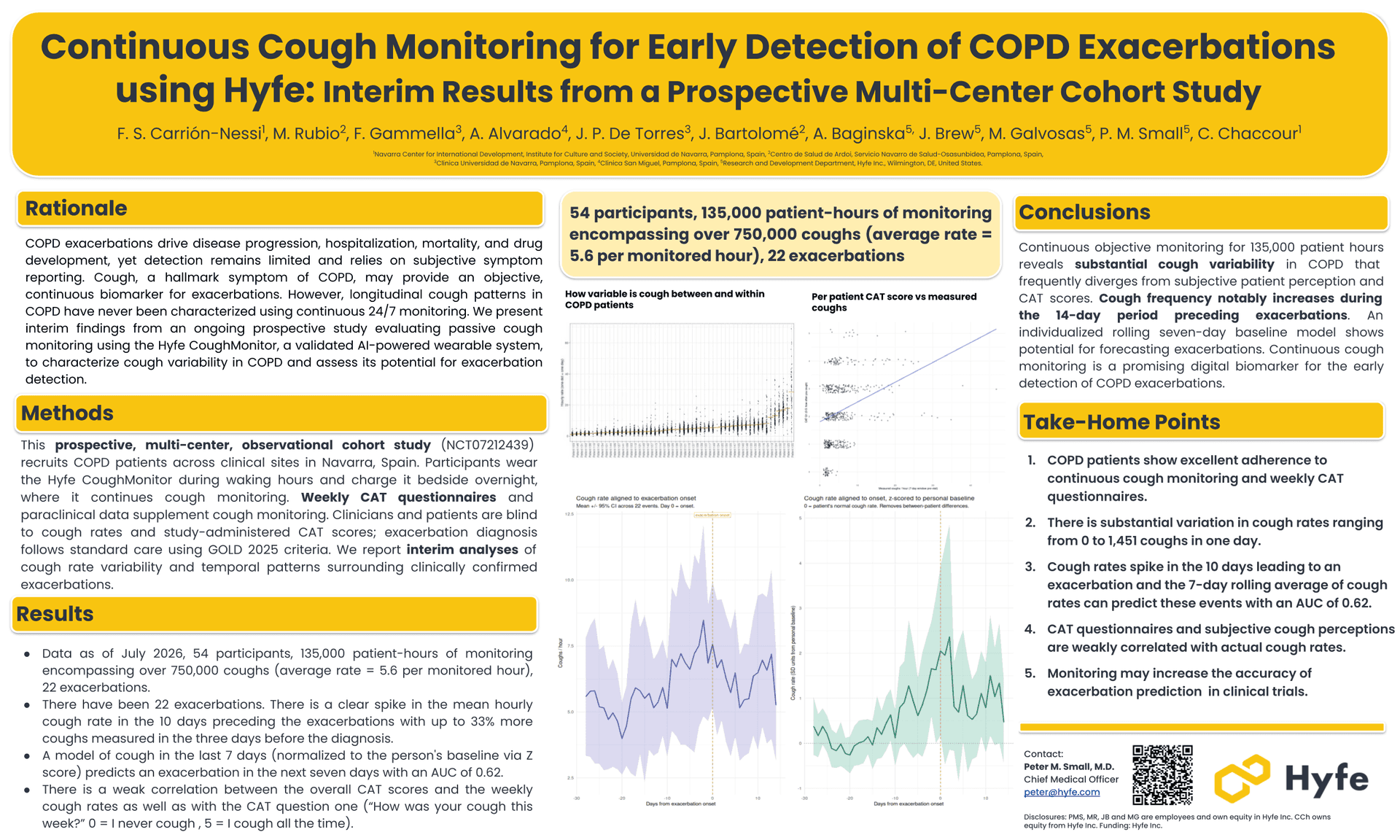
Updated interim data from 54 COPD patients and 135,000 monitored hours, showing cough rates rise in the days before exacerbations and correlate only weakly with CAT scores.
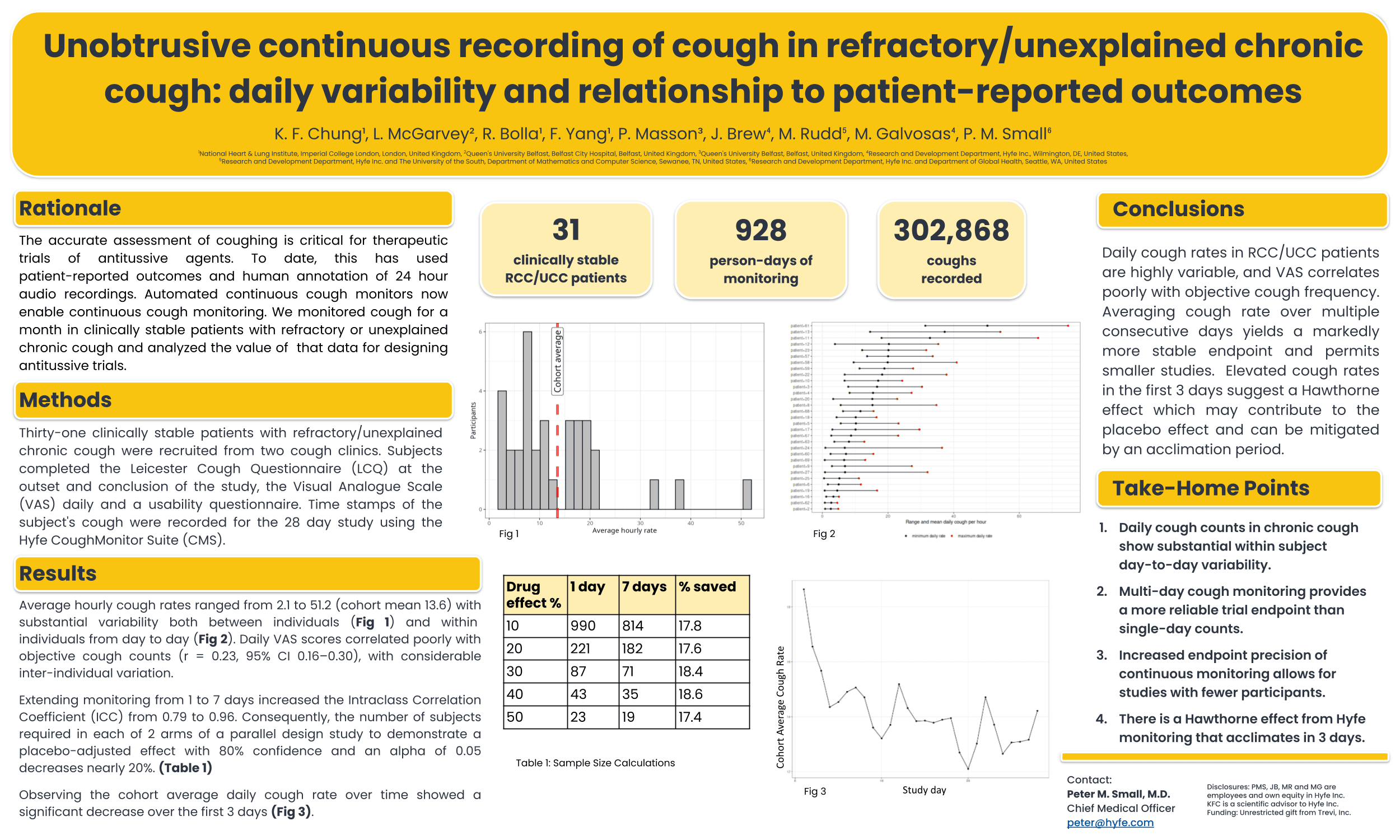
A month of continuous monitoring in stable chronic cough shows that multi-day averaging makes cough frequency a more reliable trial endpoint, allowing smaller studies, and reveals a short-lived Hawthorne effect.
Mixed-methods study in Kampala assessing 48-hour cough frequency monitoring with the Hyfe Research app for TB screening and triage, alongside staff-reported implementation barriers.
20 August 2026
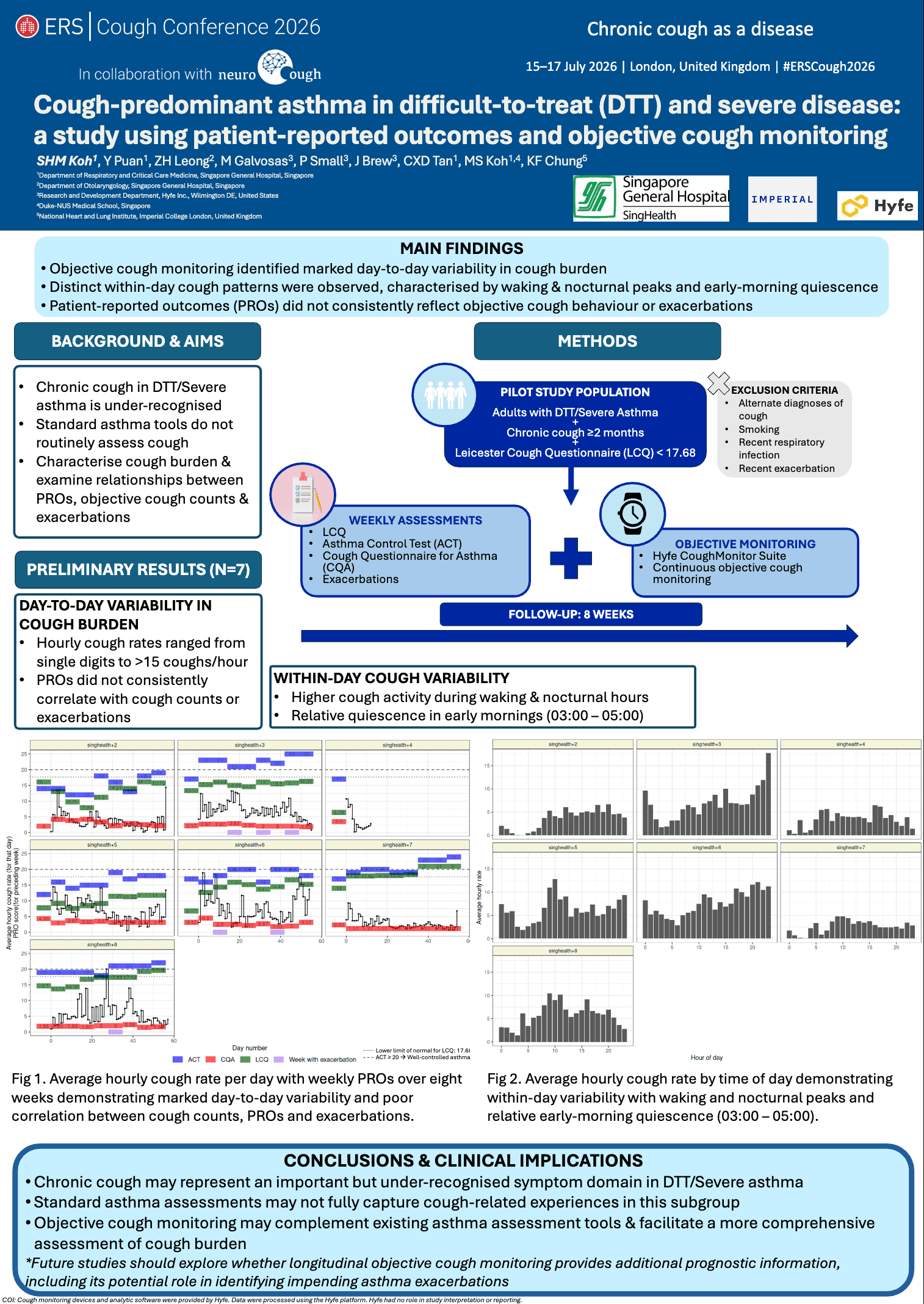
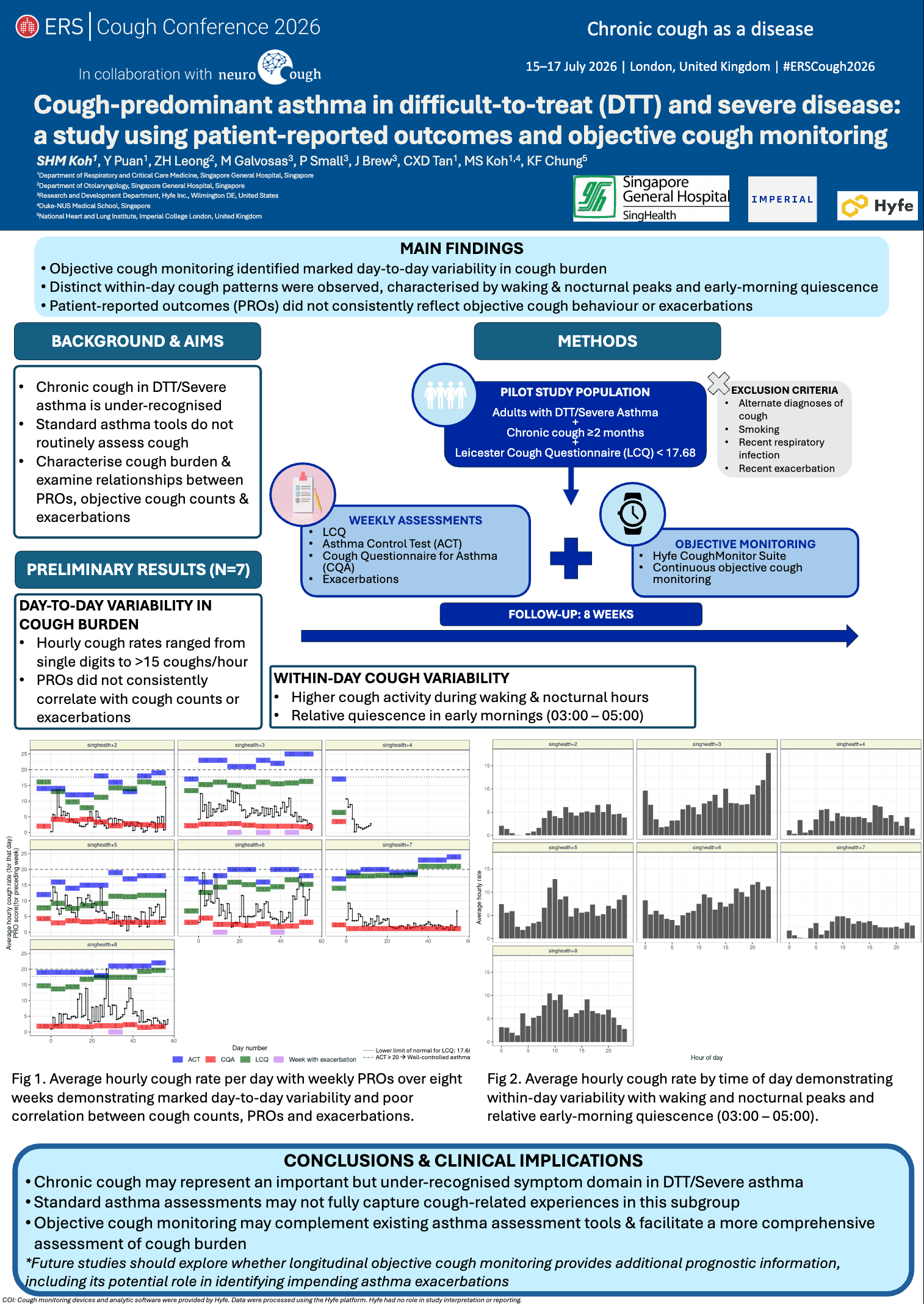
Chronic cough in difficult-to-treat and severe asthma is linked to poor outcomes but is often under-recognised, and standard asthma tools don’t routinely assess it. This pilot study at Singapore General Hospital characterized cough burden in this subgroup and examined how patient-reported outcomes relate to objective cough counts and exacerbations.
Adults with difficult-to-treat or severe asthma and chronic cough were monitored for eight weeks with the Hyfe CoughMonitor Suite, alongside weekly Leicester Cough Questionnaire, Asthma Control Test and Cough Questionnaire for Asthma scores. Objective monitoring showed marked day-to-day variability, with average hourly cough rates ranging from single digits to over 15. Within each day, cough peaked during waking and nocturnal hours, with relative quiet in the early morning (03:00–05:00). Patient-reported outcomes did not consistently track cough counts or exacerbations. The authors suggest objective monitoring could complement standard asthma assessment, and that future studies should explore its potential to flag impending exacerbations.
Hyfe provided the monitoring devices and analytics.