62
Research Trials
22
Peer-reviewed publications
17
Clinical Conditions
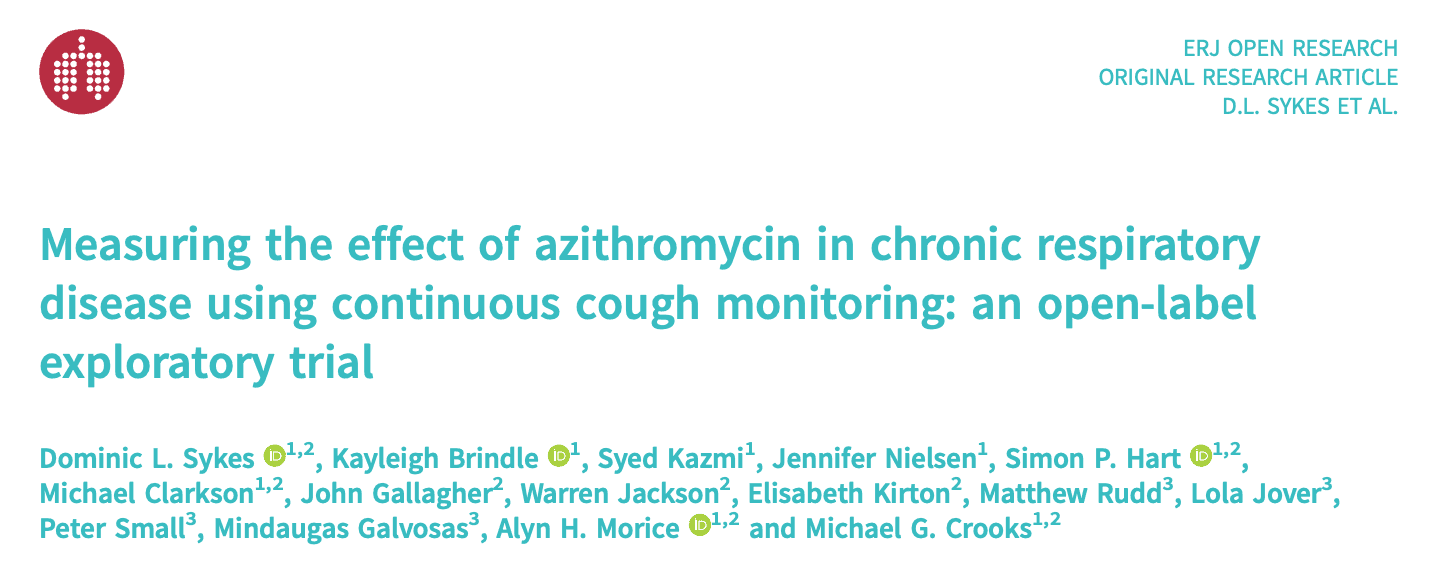
First study to assess the antitussive effect of a drug using continuous cough monitoring, tracking patients on a Hyfe-enabled smartwatch for five weeks around the start of azithromycin.

External validation of the CODA TB DREAM Challenge cough-only models in an independent Peruvian cohort recorded with the Hyfe Research app, showing reduced performance outside the original training populations.
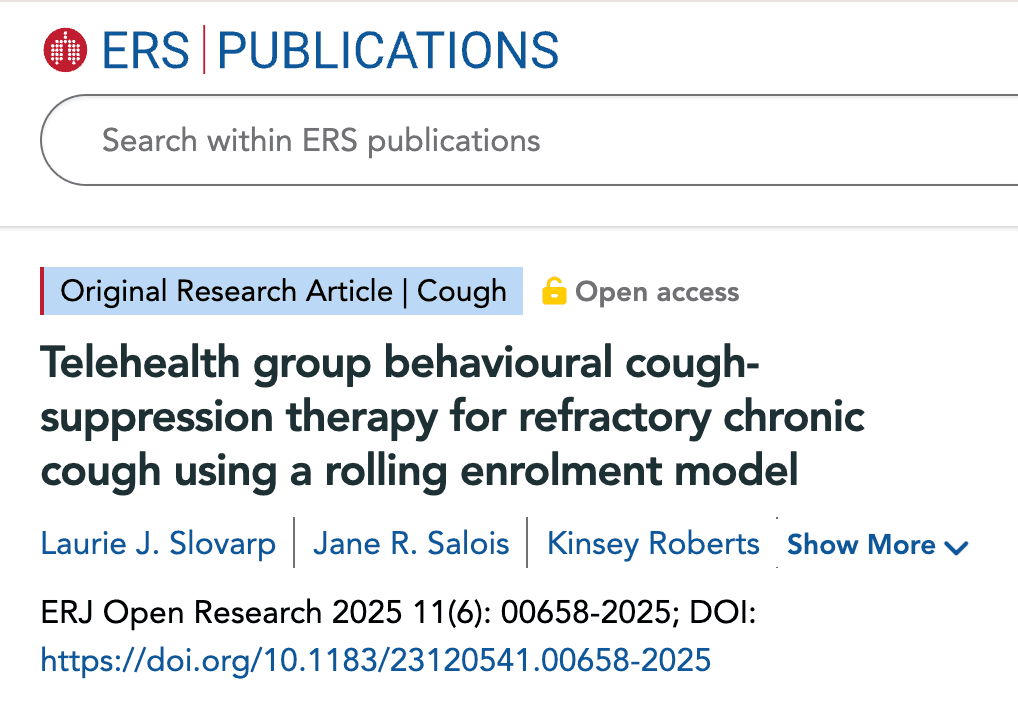
Pilot cohort study of behavioural cough suppression therapy delivered to small telehealth groups with rolling enrolment, with exploratory objective cough monitoring using Hyfe’s CoughPro app.
29 December 2025
Behavioural cough suppression therapy (BCST) is an effective non-pharmacological treatment for refractory chronic cough (RCC), but few speech-language pathologists are trained to deliver it, which limits patient access. This pilot study evaluated whether BCST remains effective when delivered remotely to small groups, using a rolling enrolment model in which new participants join sessions alongside patients already partway through treatment.
Forty-seven adults with RCC from the US, Canada, the UK, Japan and Australia completed four to six weekly video sessions in groups of two to five. Most had been coughing for more than a decade. Sessions centred on education about cough hypersensitivity, training in suppression techniques, weekly adherence review and individual goal setting, structured around the “Three Rs of BCST” (be Ready, Respond, Regain control), a framework co-developed with Hyfe. Outcomes were assessed with the Leicester Cough Questionnaire (LCQ) and the Patient Global Impression of Severity (PGI-S) at one week and one month after treatment. Participants could also opt into objective cough monitoring with Hyfe’s CoughPro app.
All but one participant exceeded the LCQ’s minimal clinically important difference. The mean total score rose by about 7 points, an effect that was sustained at one month and exceeds gains typically reported for individual BCST and for P2X3 antagonist trials. Nearly half of participants reached normative LCQ values after treatment. Participants also reported fewer severe coughing bouts, less urge to cough and less social avoidance. In the six participants with sufficient CoughPro data, hourly cough rate fell by an average of 68% and cough bouts by 78% by the final week of treatment.
The results suggest group telehealth BCST with a strong focus on consistent suppression could substantially widen access to an effective therapy. Because the study had no control group and objective monitoring data were limited to a small subset, controlled trials will be needed to confirm the comparative efficacy. Hyfe supplied the CoughPro app and the cough frequency data for the study.