62
Research Trials
22
Peer-reviewed publications
17
Clinical Conditions
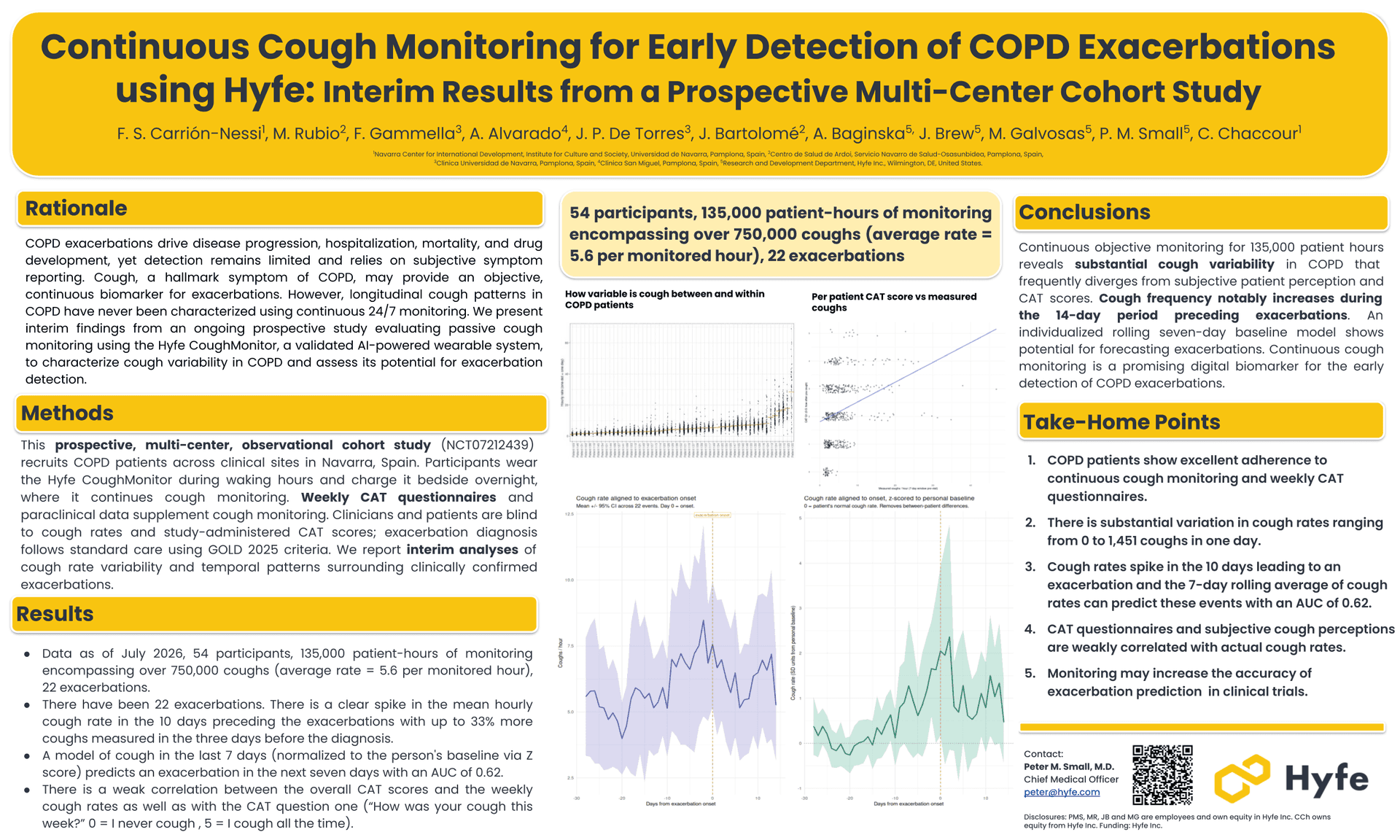
Updated interim data from 54 COPD patients and 135,000 monitored hours, showing cough rates rise in the days before exacerbations and correlate only weakly with CAT scores.
Mixed-methods study in Kampala assessing 48-hour cough frequency monitoring with the Hyfe Research app for TB screening and triage, alongside staff-reported implementation barriers.
Mechanistic and clinical study linking heatwave-level air dryness to cough hypersensitivity, with a placebo-controlled pilot trial showing reduced cough bouts after alkaline divalent salt aerosols, measured with Hyfe continuous cough monitoring.
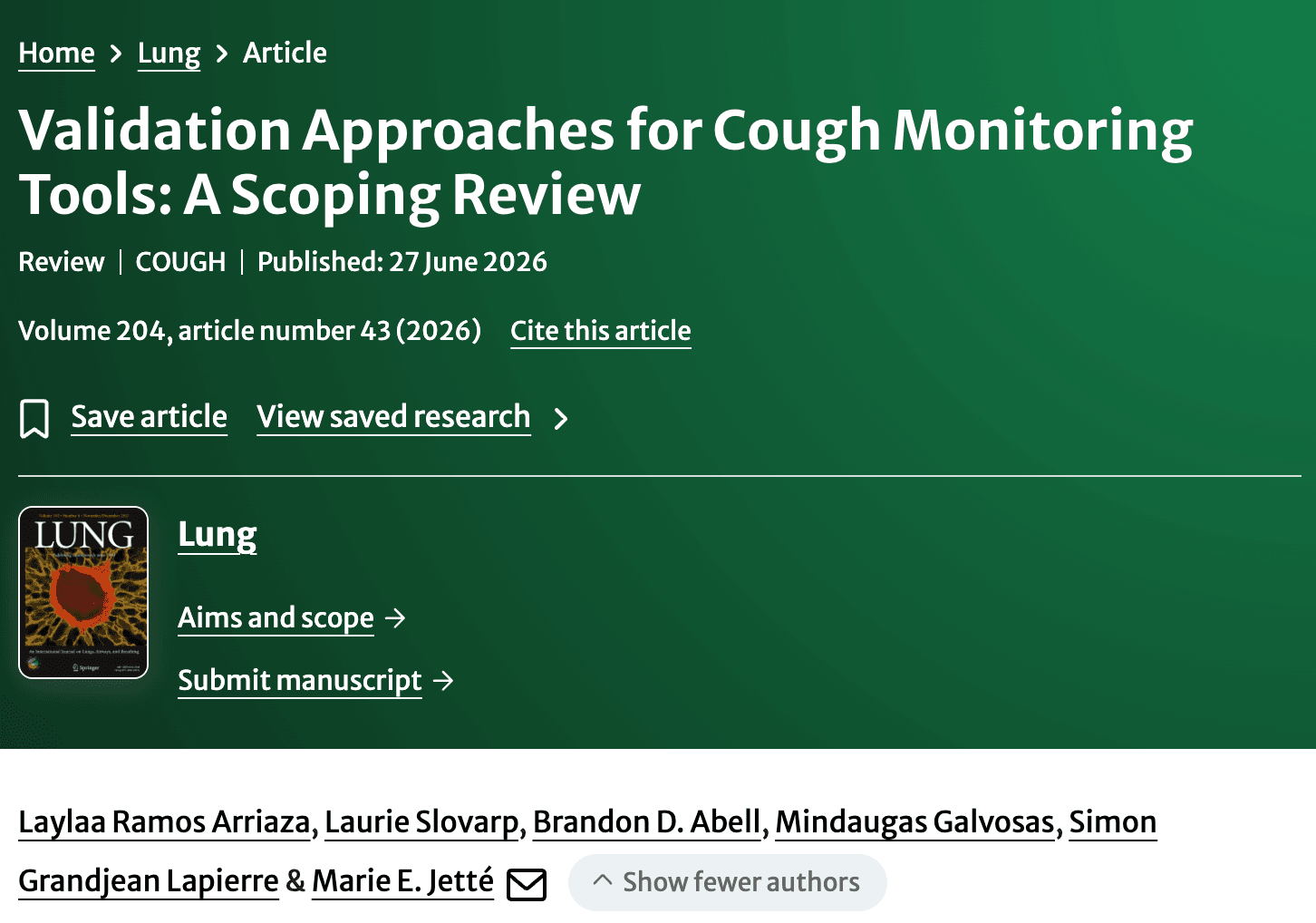
Ambulatory cough monitors are increasingly used in clinical research, but there’s no agreed method for showing that a monitor measures cough accurately. This scoping review mapped how cough monitoring systems have been validated to date, and where differences in methodology may limit comparisons between devices and their use in clinical trials and practice.
Following PRISMA-ScR guidelines, the authors systematically searched Embase for peer-reviewed studies reporting validation of cough monitoring systems in human participants or human-derived datasets. Two reviewers independently screened studies and extracted data using a standardized form. Fifty studies were included, covering technologies from audio-based recorders to wearable sensors and machine learning platforms.
Validation practice varied widely. Most studies involved adults and were conducted in laboratory or home settings. Manual human annotation was the most common reference standard (two thirds of studies), followed by neural network-based references, with the rest using other methods. Even among annotation-based studies, the definition of a cough event differed. Outcomes were reported as individual coughs, cough epochs or time-based measures, which makes results hard to compare directly. Many systems performed well in controlled conditions, but accuracy in real-world settings was less consistent, particularly with background noise or multiple speakers.
The review concludes that the field needs a standardized validation framework, with agreed reference measures, consistent cough event definitions, shared datasets and routine real-world testing, before cough monitoring can be fully translated into clinical use. Hyfe’s Mindaugas Galvosas is a co-author.