53
Research Trials
20
Peer-reviewed publications
16
Clinical Conditions
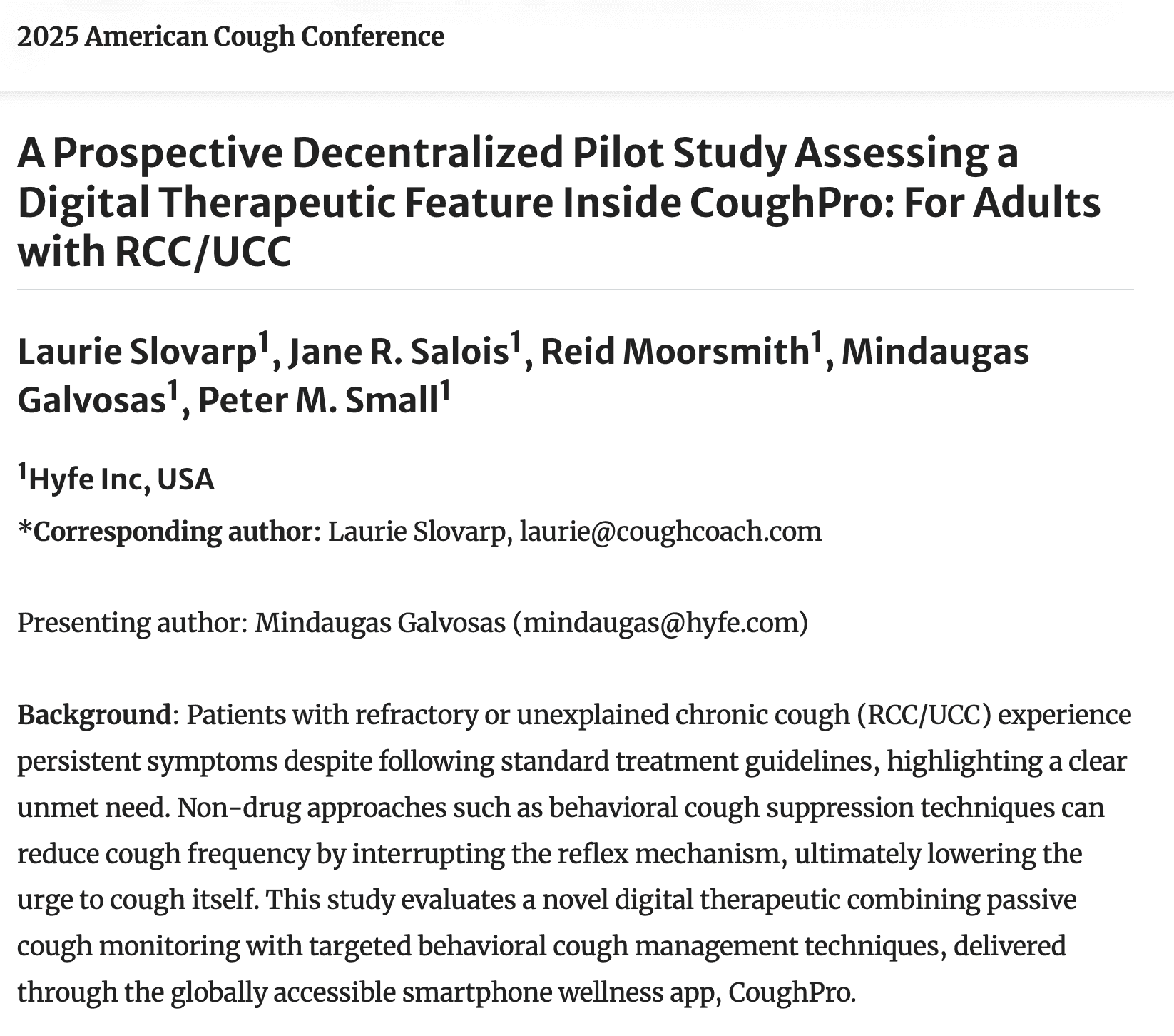
Hyfe pilot study tests a digital therapeutic combining passive cough monitoring with behavioral suppression techniques delivered through the CoughPro app.
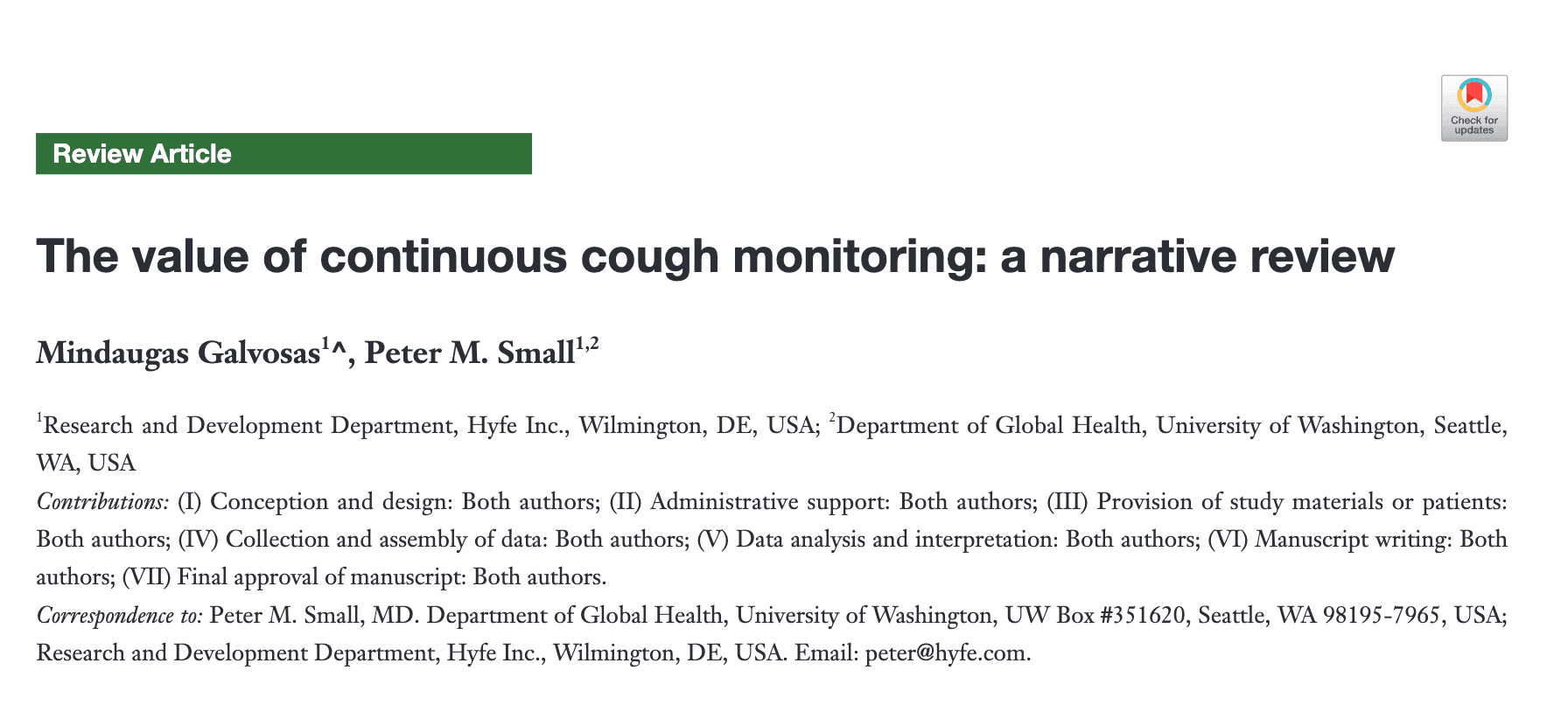
This narrative review by Hyfe's R&D team makes the case that continuous cough monitoring (CCM), powered by acoustic AI, transforms cough from a subjective symptom into a quantifiable digital biomarker.

Independent ERS 2025 NeuroCOUGH trial uses the Hyfe Cough Tracker to test feasibility of studying azithromycin's effect on cough and oesophageal motility.
19 September 2024

The recent advances in digital and wearable technologies with artificial intelligence (AI) enable the use of continuous cough monitoring (CCM) to objectively monitor symptoms as surrogate markers of treatment efficacy in pulmonary tuberculosis (PTB). The objectives of this study are to describe the evolution of cough during PTB treatment in adult and to assess the feasibility of community-based CCM.
We prospectively enrolled PTB adult participants upon treatment initiation. Participants’ coughs were continuously monitored during 6 months with a smartphone loaded with an app able to detect cough by using an AI algorithm.
wenty-two participants were included. The median age was 28.5 (IQR: 22–42) and 62% were male. The median cough per hour (medCPH) was 11.0 (IQR: 7.0–27.0) at week 1. By the end of the intensive phase of PTB treatment at week 8, the medCPH was 3.5 (IQR: 1.5–7.0), which was significantly lower than the medCPH at week 1 (p=0.002). At week 26 (end of treatment), the medCPH was 1.0 (IQR: 1.0–2.5). The adherence to CCM was high during the first 13 weeks of PTB treatment and then waned over time. The adherence was similar during daytime and nighttime.
Cough counts rapidly drop during the intensive phase of PTB treatment and then slowly decrease to a low baseline level by the end of the treatment. Community-based CCM using digital technology is feasible in low resource settings.