62
Research Trials
22
Peer-reviewed publications
17
Clinical Conditions
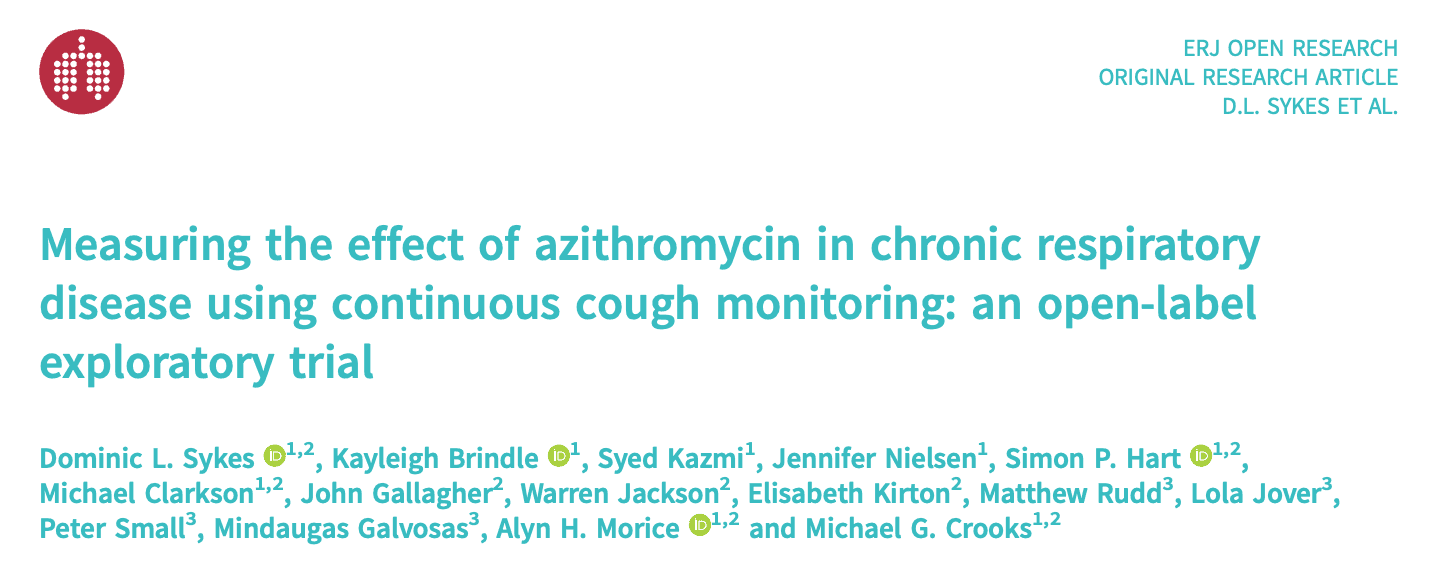
First study to assess the antitussive effect of a drug using continuous cough monitoring, tracking patients on a Hyfe-enabled smartwatch for five weeks around the start of azithromycin.
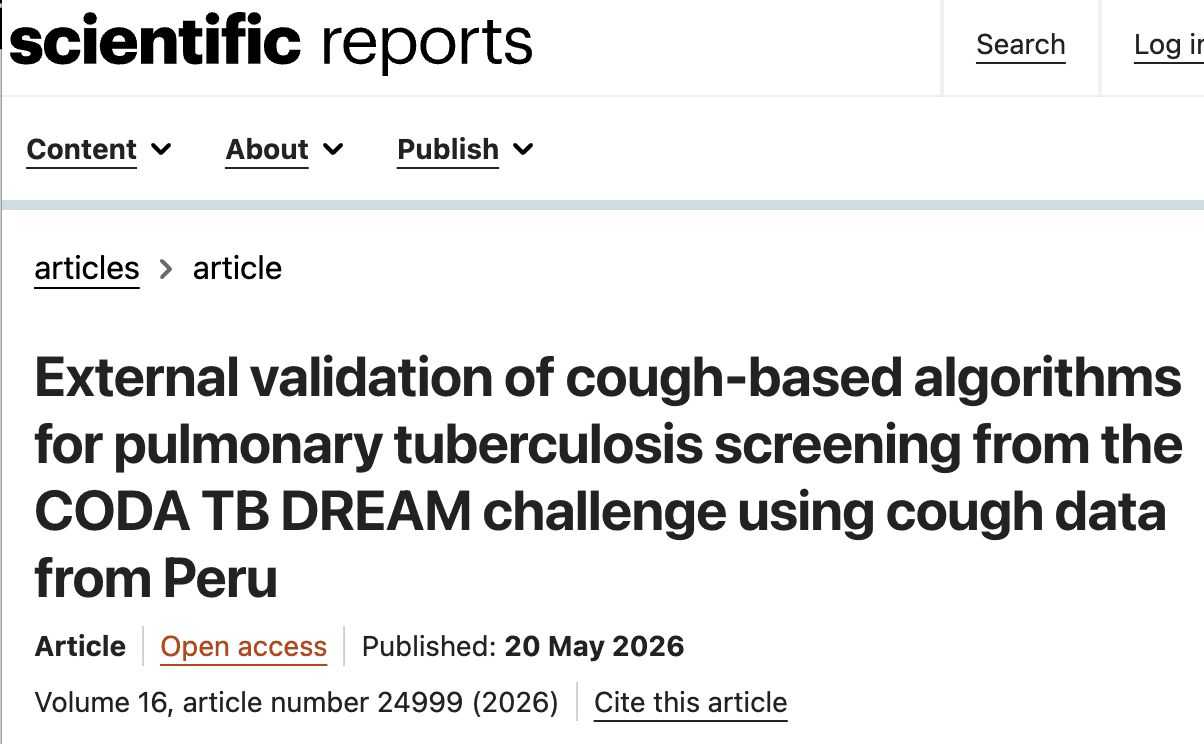
External validation of the CODA TB DREAM Challenge cough-only models in an independent Peruvian cohort recorded with the Hyfe Research app, showing reduced performance outside the original training populations.
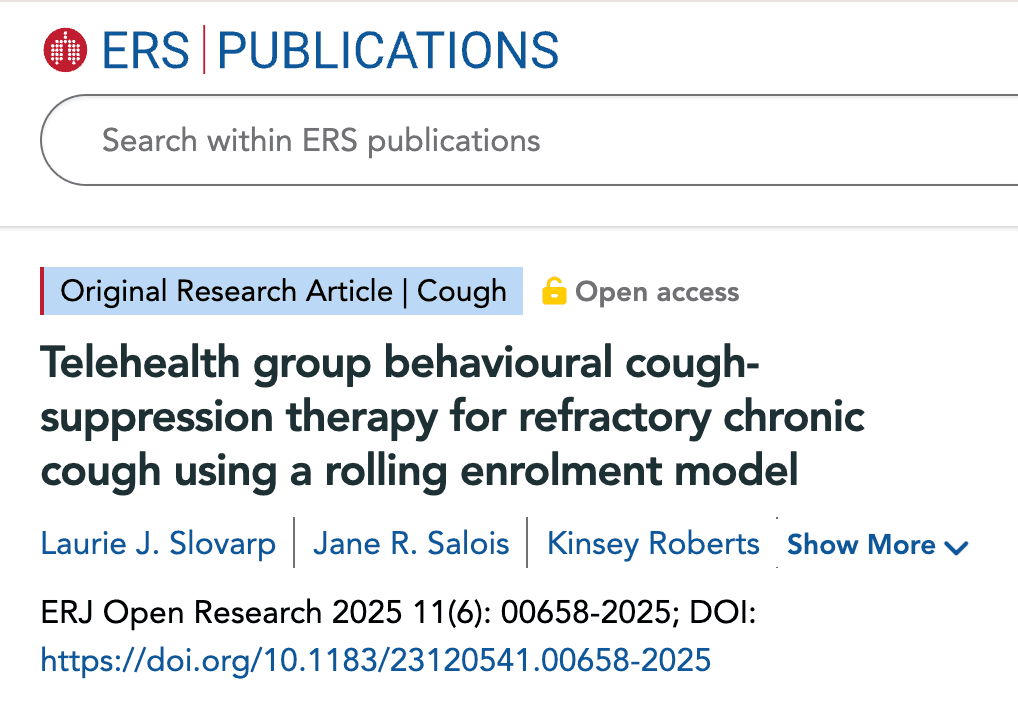
Pilot cohort study of behavioural cough suppression therapy delivered to small telehealth groups with rolling enrolment, with exploratory objective cough monitoring using Hyfe’s CoughPro app.
16 September 2025
This study reports the outcomes of the CODA TB DREAM Challenge, an open-access competition that evaluated whether solicited cough sounds, alone or combined with routine clinical variables, can discriminate microbiologically confirmed pulmonary tuberculosis. The challenge was designed as a step toward a low-cost, specimen-free triage tool suitable for primary care settings in high-burden countries, where radiography-based screening is often unavailable.
The underlying cohort comprised 2,143 symptomatic adults (cough of two weeks or longer) enrolled at outpatient facilities in seven countries across Africa and Asia. All participants underwent a standardized TB reference evaluation, including Xpert MTB/RIF Ultra and culture. Baseline solicited coughs were captured on Android smartphones with the Hyfe Research app, which automatically detects cough events and stores the 0.5-second peak segment. Half of the cohort was released for model development, and the rest was held back for blinded validation. Teams competed in two tracks: acoustic features only, and acoustic features plus demographic and clinical data typically available at triage.
Across 17 validated submissions, acoustic-only models showed moderate discrimination (AUROC 0.69–0.74). Adding clinical variables consistently improved performance (AUROC 0.78–0.83), and five of six combined models met the challenge’s prespecified threshold of at least 80% sensitivity and 60% specificity. The leading model achieved 73.8% specificity at 80% sensitivity, although none reached the WHO target product profile for a screening test. Post-hoc analyses showed lower discrimination in women and in people living with HIV, variation between countries, and a positive association between predicted TB probability and Xpert semiquantitative bacillary load.
The findings support cough acoustics as a complementary, rather than standalone, input for TB triage, and show that an open, centrally validated challenge can produce reproducible models within a few months. The training data and benchmarking platform remain publicly accessible for ongoing model development. Hyfe CMO Peter Small contributed to the study’s conception, and Hyfe researchers participated as members of the challenge consortium.